I’ve tried rather more exoskeletons over the past couple of years than I ever expected to. They’ve all had one thing in common: they’ve assisted either my hips or my knees.
The Vastnaut One does both. Four motors, powering the hips and knees together, in one wearable device. And the difference is not subtle.
Even a brief bounce around the garden felt unlike anything I’d experienced before. But there’s only so much you can learn by hopping about outside your house like an enthusiastic frog. For a more demanding test, I took it to Jacob’s Ladder at Cheddar Gorge: 274 steps, which I intended to run up.
This is an early prototype, not a finished retail product. There are claims I haven’t verified and a battery design I’d like to see improved. But the actual experience of moving in it? Good grief.
Quick Summary
- Four motors assist both hips and knees, delivering the strongest lower-body assistance I’ve experienced.
- Initial fitting takes time, but quick-release clips make subsequent use much simpler.
- The claimed 12-mile battery range remains unverified, and proprietary charging is my main criticism.
- This prototype is an activity-assistance device, not a medical device or a guaranteed crowdfunding delivery.
Why Powering Both the Hips and Knees Matters
Real-world exoskeletons are rather less Matrix than the name might suggest. They’re designed to support movement by adding power around particular joints or limbs.
On the Vastnaut One, motors sit beside both hip joints and both knees. Those motors move the connected frame, assisting your own movements rather than leaving your legs to do all the work.
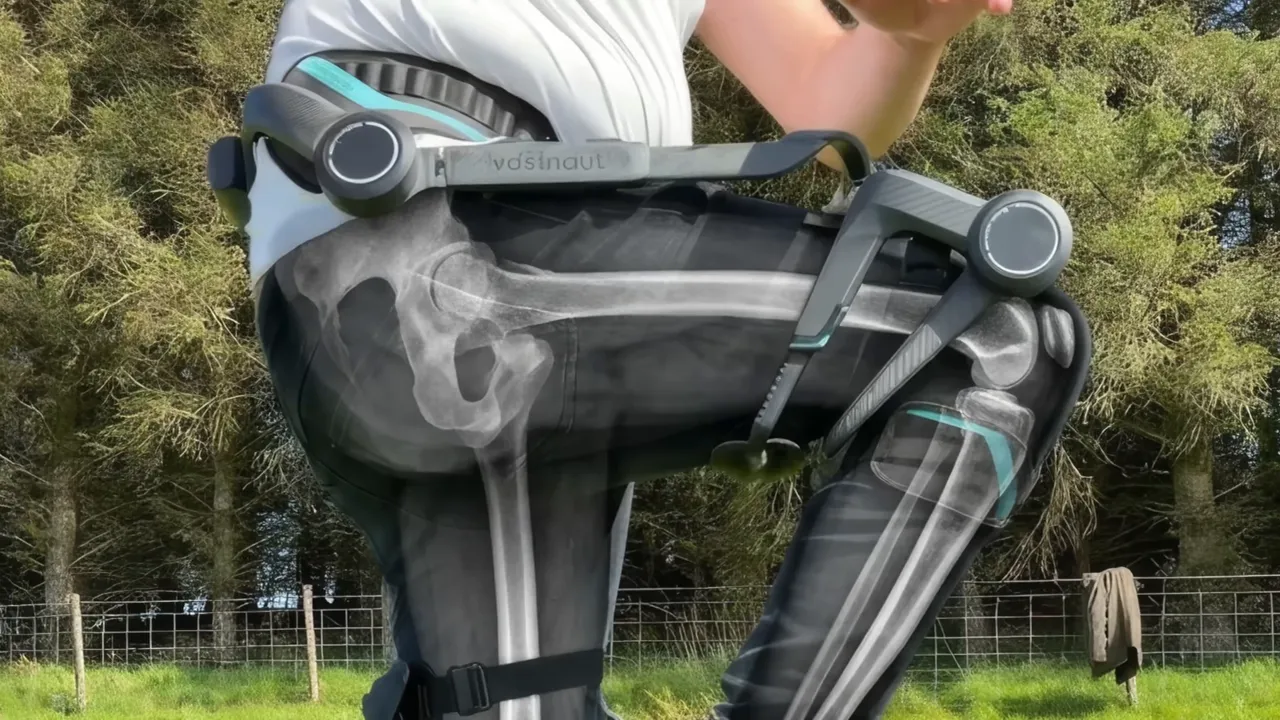
The first exoskeleton I tried was a proper jaw-on-the-floor moment. It belonged to that small category of technology that changes your perception of what’s possible, alongside things like folding phones and useful robots.
I didn’t expect another exoskeleton to give me quite the same reaction. Yet powering the hips and knees simultaneously did exactly that.
It isn’t simply a familiar sensation turned up a notch. Supporting both joints makes movement feel noticeably different from the single-joint devices I’ve tested. That distinction is also important when comparing products: this is a four-motor machine doing a somewhat different job from a two-motor alternative.
Fitting the Vastnaut One: A Lengthy First Setup
Getting it fitted for the first time took a while. Some of that was because it was a prototype. Some of it was because I was a naughty boy and didn’t bother reading the instructions.
Even with the instructions, though, there are an awful lot of adjustments to make. You need to customise the frame and straps to suit your body, using a combination of fixed rails and Velcro adjustments.
Happily, the adjustment hardware felt solid and well thought out. More importantly, you don’t have to repeat the entire fitting process every time you put it on. Once it’s set up, quick-release clips let you get in and out without undoing all that careful adjustment.
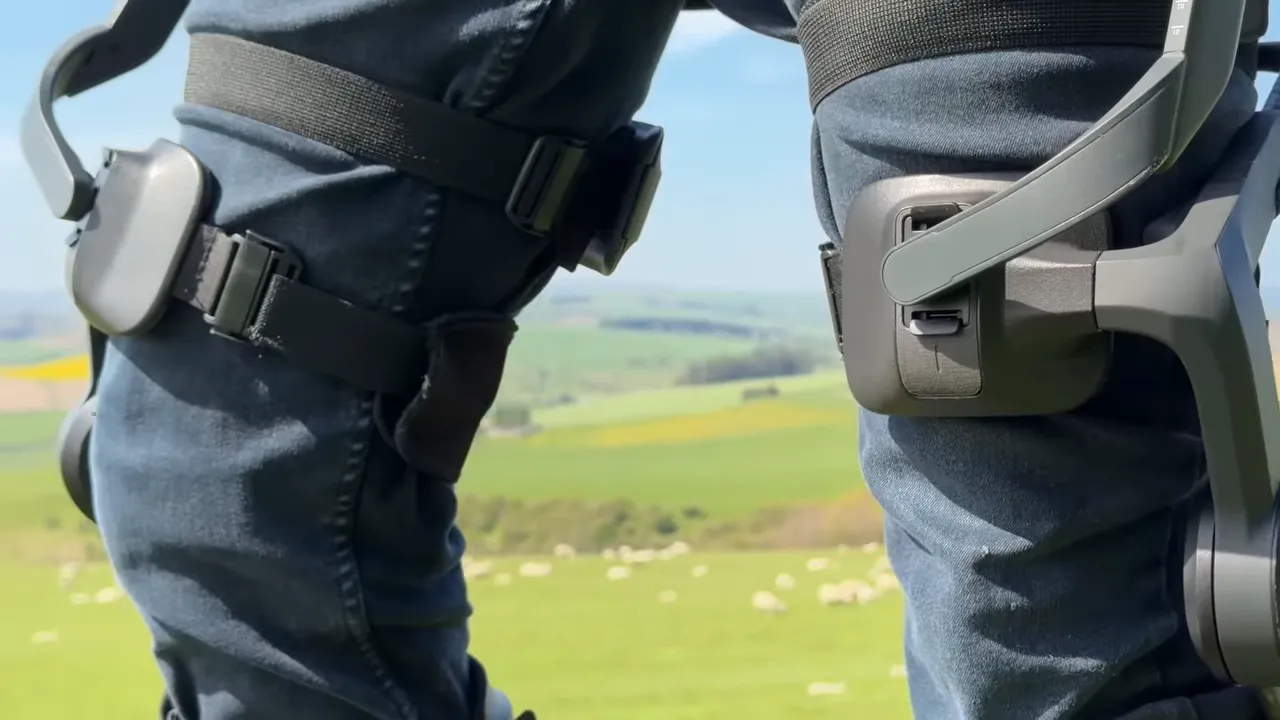
It even fitted me at 6 feet 8 inches
I’m 6 feet 8 inches tall, and the Vastnaut One fitted me. Just. A few of the length adjusters needed to be at their maximum settings, but it accommodated a height that routinely causes problems with wearable equipment.
That isn’t a substitute for checking the final sizing specifications, but it’s encouraging evidence of the adjustment range.
There was also plenty of room left in the waist adjustment. I possess the finely honed physique of a middle-aged father who enjoys beer, largely because that is precisely what I am. So I was pleased with how much flexibility remained.
Surprisingly light, and genuinely comfortable
With four motors and a battery attached, I expected something more cumbersome. Instead, the carbon-fibre framing keeps it feeling surprisingly light.
I don’t have a measured weight to give you, but my impression while wearing it was very positive. The frame felt solid, and the whole thing was comfortable once properly adjusted.
That matters enormously. There’s not much point strapping on a power-assistance device if most of its effort goes towards compensating for the enormous contraption you’ve just attached to yourself.
Here, the design felt focused on letting me benefit from the assistance, rather than simply making me more encumbered. For an early prototype, the overall build was impressive.
The First Test Had Me Bouncing Around Like a Frog
The light frame certainly doesn’t indicate a lack of power.
From the moment I started moving in it, I was bouncing about in ways my knees would normally decline to participate in. Jogging around the garden, lifting my legs and doing little frog jumps gave me an immediate sense of how much assistance was available.
My legs do not normally behave like that anymore. Apparently, with some robotic encouragement, they still can.
The best way I can describe the sensation is that a weight had been lifted off me. It felt genuinely superhuman, not because I’d suddenly acquired a new skill, but because familiar movements required so much less apparent effort.
Of course, a short garden test is one thing. A steep staircase is quite another.
Running Up Jacob’s Ladder: 274 Steps
Jacob’s Ladder turned out to be steeper than I’d expected. Nevertheless, I began the climb with an enthusiasm that suggested I’d briefly forgotten I wasn’t 15 anymore.
Almost immediately, I could feel the exoskeleton driving my legs upwards. I was still making the effort and pushing through the climb, but the assistance was substantial.
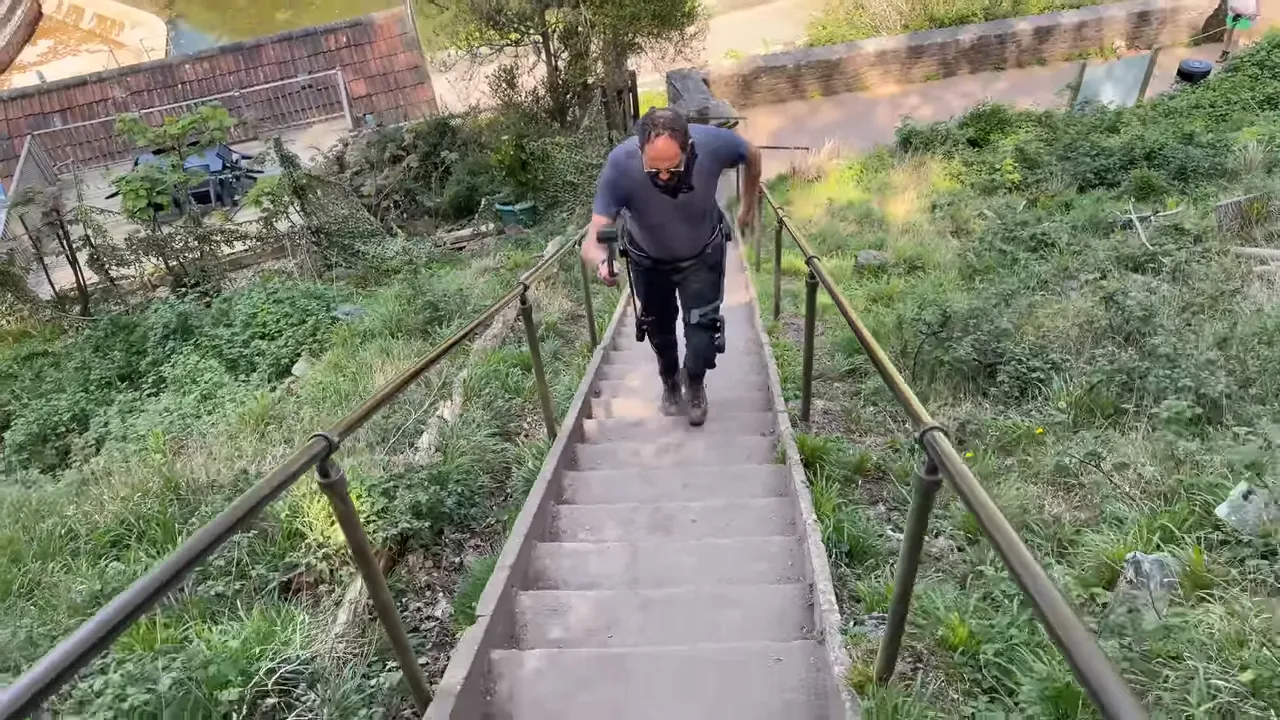
Partway up, I was breathing harder, but the climb felt remarkably manageable. At moments, the movement felt closer to tackling level ground than hauling myself up a long flight of steps.
When I reached the top, my first reaction was essentially disbelief that I’d already finished. All 274 steps were behind me, I’d got there quickly, and I wasn’t nearly as out of breath as I’d expected.
The Vastnaut One absolutely demolished that climb.
This was a hands-on experience, not a controlled exercise study. I’m not attaching a measured percentage improvement to it. What I can say is that the assistance felt enormous, and the staircase made that difference very obvious.
The Adaptive Assistance Is More Interesting Than the AI Label
Since the start of 2025, it has felt as though every manufacturer has attached the letters AI to anything that will sit still long enough.
So I’m rather more interested in what the Vastnaut One’s onboard algorithm actually does than in the buzzword attached to it.
There are several selectable power-assistance levels, giving you basic control over the amount of help. Beyond that, the system is intended to tailor its output to both your personal profile and your activity.
Power tailored to the person
The idea is that the same nominal assistance setting shouldn’t deliver an identical amount of force to everyone.
For example, a person weighing 45 kg needs a different level of support from someone weighing 110 kg. The system is supposed to account for that difference, scaling the assistance to suit the person using it.
I couldn’t independently verify that personalisation across different body types. Each person would have their own tailored experience, and my testing doesn’t establish exactly how the calculations work.
What I can confirm is that it provided more than enough assistance for my own substantial British build.
Power that changes with the activity
I could also feel the assistance change with what I was doing. Running up Jacob’s Ladder produced a more intense boost than ordinary walking.
The intention is straightforward: provide more help when it’s needed and conserve power when it isn’t.
Activity adaptation isn’t entirely new. I’ve encountered it in at least one other exoskeleton. What stood out here was the combination of:
- Selectable assistance levels.
- Personal-profile-based power adjustment.
- Ongoing adaptation to the activity.
Together, those features aim to produce assistance that feels more tailored to your needs, rather than a fixed amount of robotic enthusiasm applied indiscriminately.
My experience covered walking, running, hiking, jumping and that rather enthusiastic stair climb. Vastnaut also hopes to optimise its models for activities such as skiing and cycling, but those are long-term development goals, not features I tested.
Battery Life Sounds Promising, but Charging Needs Work
My main criticism concerns the battery system. Not necessarily its endurance, but the practicalities of swapping and charging it.
Vastnaut claims up to 12 miles of walking or hiking per battery. I haven’t verified that figure, and with the prototype still under development, I wouldn’t treat my testing as a final battery-life assessment.
If the finished product achieves that range, I’d be very happy with it. Spare batteries could potentially make it useful for much longer outings, including multi-day trips, depending on the distance covered.
The rear battery placement makes sense, until you need to change it
The battery sits centrally behind your waist. There are sensible reasons for that: it balances the weight and keeps the pack out of your way.
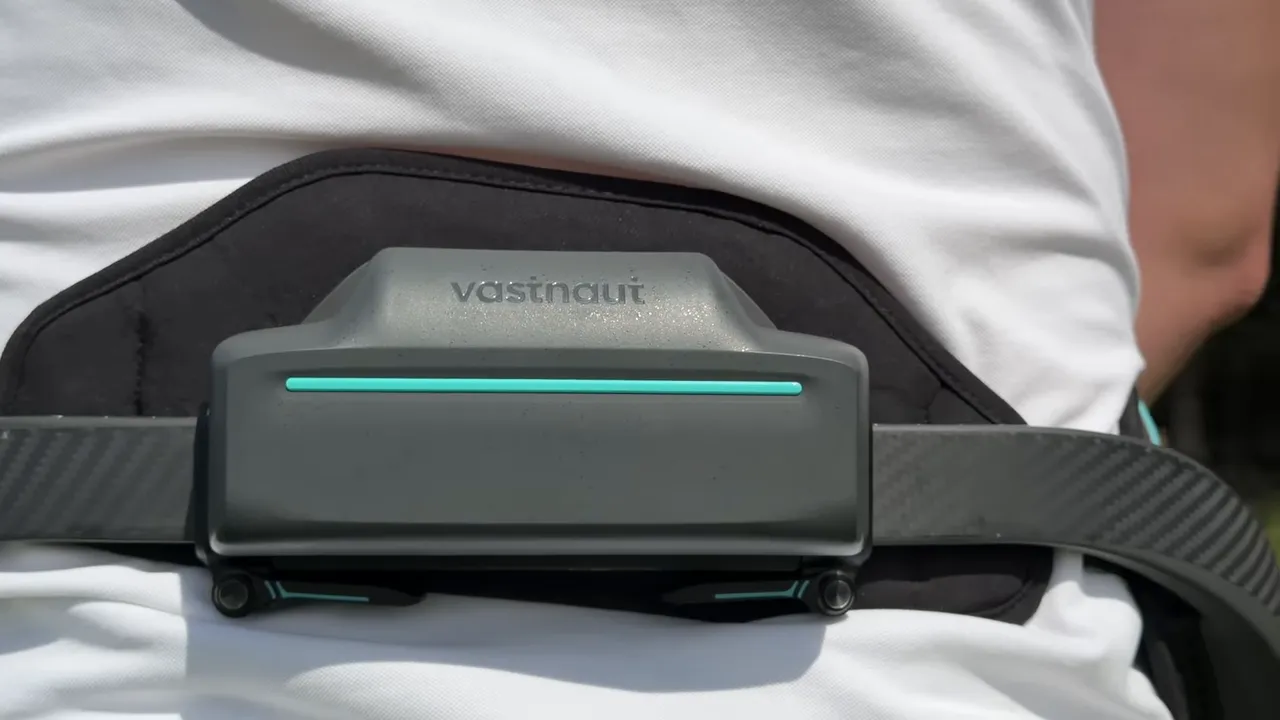
Put it at the front and it could dig into your stomach. Put it on one side and the weight becomes less balanced.
However, the device is designed to allow battery changes without removing the exoskeleton, and doing that behind your back is not especially graceful. Unless you’ve developed eyes in the back of your head, it takes a bit of fumbling.
Vastnaut does offer a cable that lets you move the battery away from the rear mounting point. You can carry it in a small waist bag or a backpack instead, which is a useful touch.
I rather like the idea of two side-mounted packs, one on each side like battery-powered gun holsters. That’s my suggestion, not a promised product feature, and I don’t expect the main layout to change for release.
Please put USB-C on the batteries
The more realistic improvement would be a battery with a USB-C charging port, either at launch or as a later accessory.
The prototype batteries use a proprietary charging connection. That means packing a dedicated charger for a long hike or multi-day expedition.
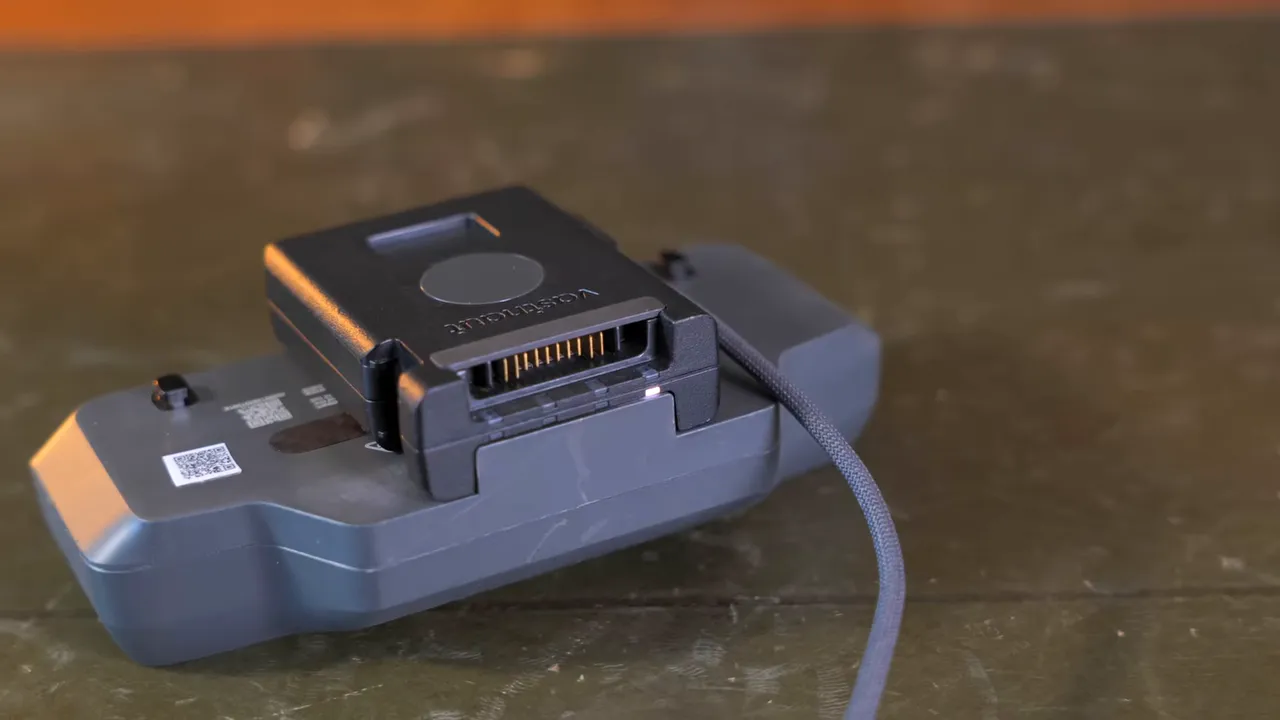
The charger is small and light, but space and weight matter when you’re carrying everything yourself. There’s a good chance you already have a USB cable for your phone. Being able to use that same connection for the batteries would make the whole system more convenient.
So, Vastnaut: a USB-C port on the batteries, please. For such an impressive prototype, it’s a remarkably practical thing to be left grumbling about.
Two Important Caveats Before Getting Carried Away
This is a prototype with a crowdfunding launch
At the time of testing, Vastnaut was preparing a Kickstarter campaign. That means the device I used should be understood as an early example of the intended product, not a guarantee of exactly what will eventually reach customers.
Before backing any crowdfunding project, familiarise yourself with the risks of supporting hardware before launch. Kickstarter’s Trust & Accountability information is a useful starting point.
My assessment is of the device I tried, not the company’s ability to fulfil its crowdfunding promises. Those are separate questions, and the financial risk of backing remains yours.
If you’re interested in the project, the Vastnaut campaign link is below. Check its current status and details rather than assuming the prototype’s specifications are final.
This is not a medical device
The Vastnaut One is designed to augment movement during activities such as hiking and running. It is not a medical device.
The aim is to reduce effort so you can travel further, carry more or keep going for longer. The suggested energy-saving figure is around half your usual expenditure, but that is not something I measured or established in my testing.
I regularly receive questions about whether exoskeletons might help with particular ailments. This review cannot answer those questions, and my enthusiasm for the assistance should not be mistaken for evidence that the device can treat a condition or perform medical wonders.
My Verdict: The Exoskeleton I Immediately Wanted Back On
The most revealing moment wasn’t necessarily the stair climb. It was taking the Vastnaut One off.
Even after wearing it for only about ten minutes, removing it made me feel heavy, sluggish and slow. Other exoskeletons have made me feel sprightlier while wearing them, but none I’ve tried has changed the apparent weight and strain of movement quite like this.
This was the first one I wanted to put straight back on.
As of my April 2026 assessment, it delivered the best lower-body exoskeleton experience I’d tested. There’s an important qualification: four motors assisting two joints per leg make it difficult to draw a completely fair, direct comparison with two-motor devices supporting only one joint.
It’s also still a prototype. Battery range needs verification, future activity modes remain in development, and I’d very much like a less annoying charging arrangement.
But judged on the experience it delivered, the Vastnaut One is something special. Powering both the hips and knees doesn’t feel like an unnecessary extra. It feels like the reason I got to the top of 274 steps and wondered where the rest of the staircase had gone.


