The Roborock Saros 20 Neo is a slightly awkward product. Not because it is bad, but because it makes its more expensive sibling rather difficult to justify.
It keeps the Saros 20’s enormous 36,000 Pa suction rating, its clever lifting chassis, its excellent anti-tangle brushes and essentially the same mopping experience. The biggest change is the navigation technology. And at the £749 price available at the time of my review, that is a remarkably small compromise compared with the original Saros 20’s £1,299 launch price.
Cheaper does not automatically mean better, of course. But when so much of the flagship experience survives the price cut, the obvious question is: what exactly are you paying extra for?
Quick Summary
- The Neo retains the Saros 20’s 36,000 Pa suction, anti-tangle brushes and AdaptiLift chassis.
- Retractable rotating LiDAR replaces the flagship’s more sophisticated solid-state navigation system.
- Mopping remains broadly unchanged, with slightly higher downward pressure on the Neo.
- A substantial price gap makes the Neo my preferred value choice for most buyers.
Table of Contents
- Vacuuming Power: The Neo Keeps the Important Bits
- AdaptiLift Chassis 3.0: Little Legs, Big Ambitions
- Mopping: Almost Identical, With a Tiny Advantage on Paper
- The Biggest Difference: The Retractable Navigation Hat
- The Dock Changes Are Mostly Minor
- What About the Saros 20 Sonic and Flow?
- Price and Value: Has Roborock Undercut Its Own Flagship?
- Verdict: Better Value, Not Universally Better Technology
Vacuuming Power: The Neo Keeps the Important Bits
The same 36,000 Pa suction
Both the Saros 20 and Saros 20 Neo have a maximum suction rating of 36,000 pascals. That puts them among the highest-rated robot cleaners for suction at the time of this review, rather than leaving the Neo looking like a watered-down alternative.
That power is particularly appealing if you have carpets and thicker rugs, where the robot needs to pull dirt out from deeper within the pile.
Personally, I do not make much use of the upper end of that suction range. My house has stone floors throughout, and the rugs I own are low pile. It is very much horses for courses, which is precisely why having different types of robot cleaning technology makes sense.
Both models also adjust their suction dynamically for different pile lengths, increasing it on thicker carpet. Roborock claims support for pile up to 3 cm. So, if you have a precious shag rug and a lingering attachment to the 1960s, the specification is certainly encouraging.
The important comparison here is simple: choosing the Neo does not mean accepting a lower maximum suction rating.
The anti-tangle brush system returns
I was slightly concerned that Roborock might remove its dual anti-tangle main brush arrangement to reach a lower price. Thankfully, it has not.
The two brush sections taper towards a small gap in the centre. Hair that winds around them gradually moves towards that gap, where it can be pulled into the onboard dust container rather than remaining wrapped around a roller.
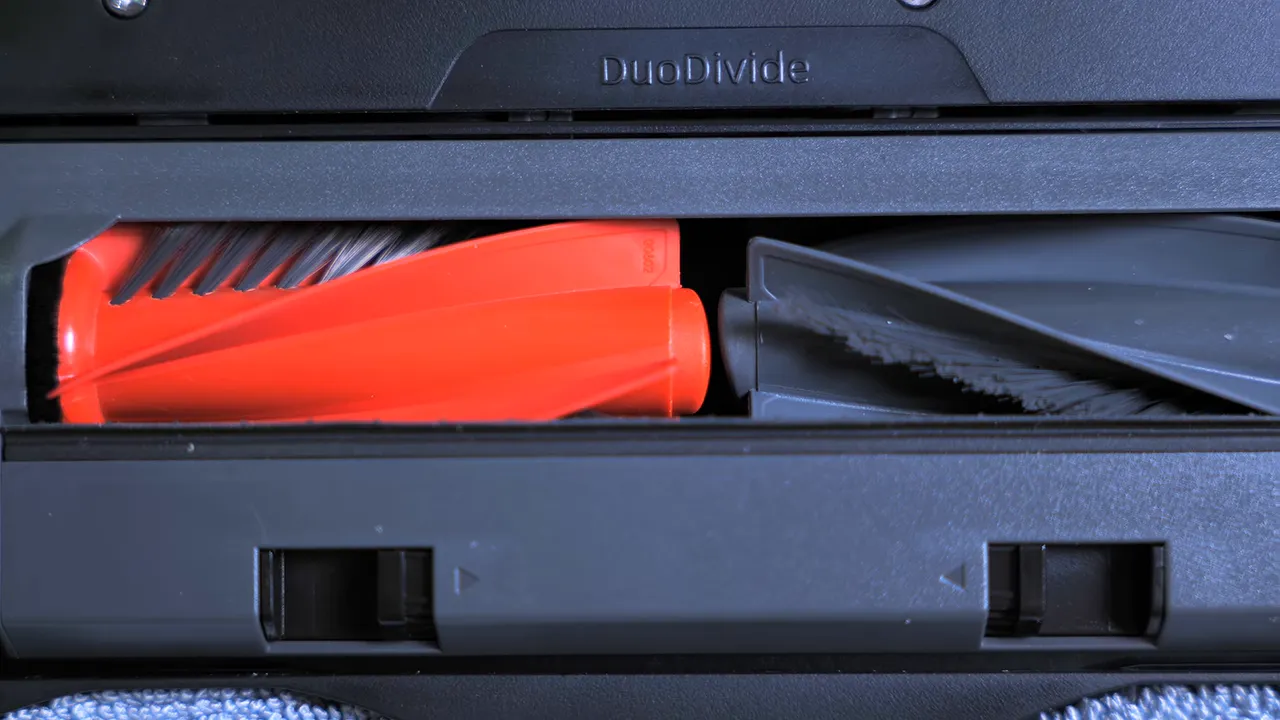
Of the main brush designs I have tried across different manufacturers, this is arguably my favourite. It has delivered one of the most intervention-free experiences, with very little tangling. Keeping it on the cheaper model matters far more to me than a minor cosmetic change.
The Neo also retains the FlexiArm side brush, which extends out from the body to sweep into corners. Between the suction, main brushes and extending side brush, the core vacuuming hardware is essentially the same as the Saros 20.
AdaptiLift Chassis 3.0: Little Legs, Big Ambitions
The Neo also keeps the AdaptiLift Chassis 3.0. This combines powered chassis lifting with small extending legs that give the robot an additional push over obstacles.
Many robots have a single lifting system at best. Some have nothing of the sort. Being able to raise the body and then deploy little stilts gives this system a more ambitious approach to thresholds and small steps.
Roborock quotes obstacle traversal up to 8.8 cm. I cannot demonstrate that limit in my own house because the floors are flat, with no steps to challenge it. Treat that figure as a claimed capability rather than a height I independently verified at home.
Even with that qualification, it is good to see the dual lifting mechanism carried over. If thresholds or changes in floor height are a problem in your home, this is a meaningful feature to retain on the more affordable model.
Mopping: Almost Identical, With a Tiny Advantage on Paper
The Saros 20 Neo uses the same basic dual rotating mop-pad approach as the Saros 20.
These are not my favourite form of robot mopping technology, but they perform well in combination with the station. The dock washes the pads at a stated 100°C, providing a high-temperature cleaning cycle intended to improve mop hygiene.
There are also some practical advantages to this arrangement:
- Automatic mop removal: the station can detach the pads when the robot is heading out to vacuum larger areas.
- Edge reach: the mop arrangement can extend towards the edges of the room.
- Mop lifting: the robot can raise the pads during a mixed-floor cleaning cycle instead of returning to the dock to remove them.
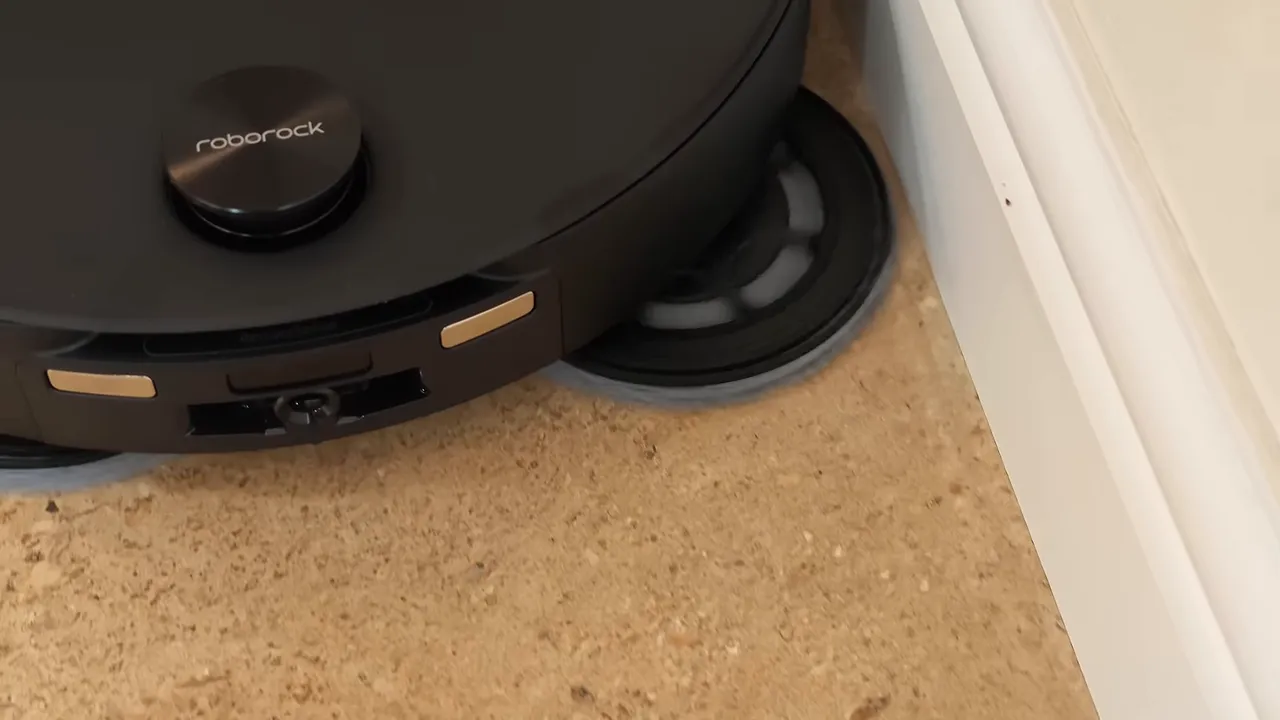
That last feature is useful in a home like mine, where hard floors are interrupted by rugs. It gives the robot a way to move between surfaces without treating every transition as a trip back to base.
There is one small specification change in the Neo’s favour: downward mopping pressure rises from 13 N on the Saros 20 to 14 N on the Neo.
In theory, that could produce a slightly more effective clean in a single pass. In practice, it is a tiny difference, and not something I would claim to distinguish meaningfully outside controlled testing. It is certainly not a reason to replace a Saros 20. It does, however, underline that the Neo is not simply worse at everything because it costs less.
The Biggest Difference: The Retractable Navigation Hat
This is where Roborock has made its most significant change.
The Saros 20 uses solid-state LiDAR. The Neo returns to a rotating LiDAR turret, similar to the retractable arrangement previously used on the Saros 10.
If you are unfamiliar with LiDAR, it uses laser-based distance measurements to help build an understanding of the surroundings. The practical distinction here is how that sensing system is packaged and operates.
How the Neo gets under furniture
With the Neo, the spinning sensor sits in a little hat above the body. That is a familiar sight on robot vacuums, but a fixed turret can become the thing that stops an otherwise slim robot fitting under furniture.
The Neo’s solution is to retract the hat into its body when it needs extra clearance. Both robots can therefore achieve a profile of roughly 8 cm, although the Neo needs its turret lowered to do so.
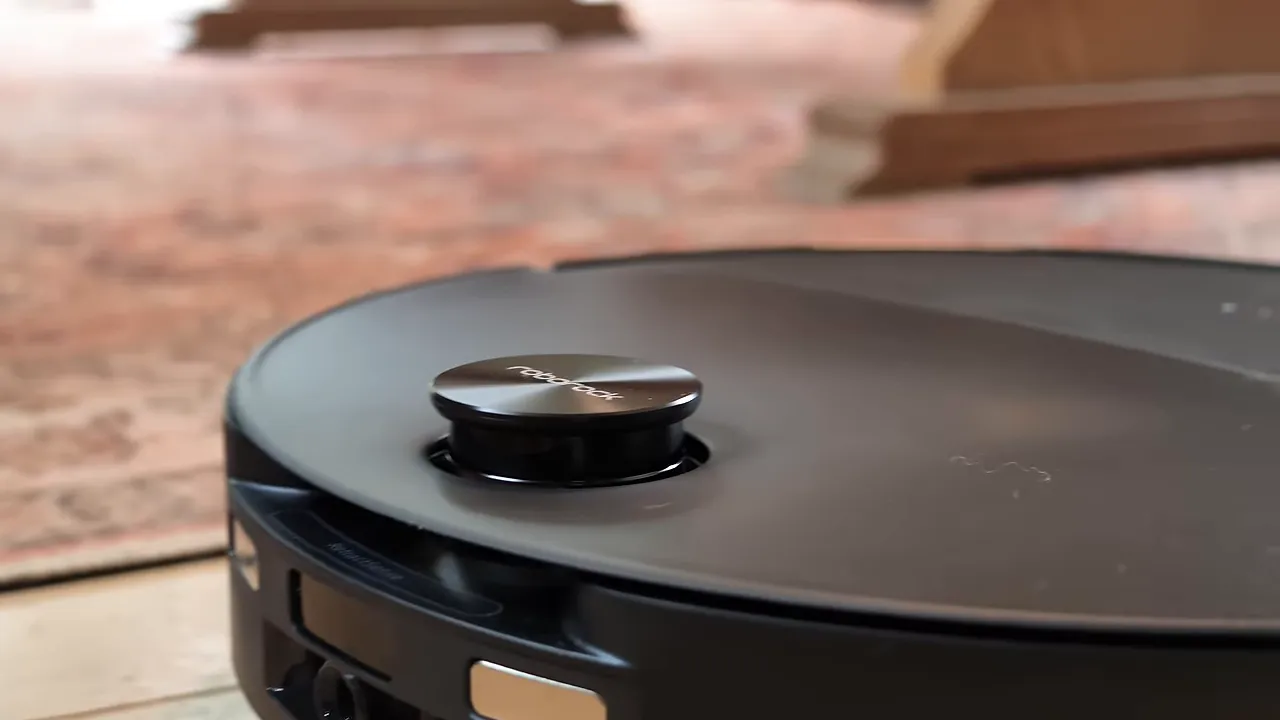
A rear slot allows the LiDAR system to continue sensing with the turret retracted. The robot is not simply lowering its hat and hoping for the best among the toys, old socks and other horrors living under the sofa.
What the Saros 20’s solid-state system does better
I consider the Saros 20’s solid-state system the better technology, but not by some enormous margin that makes the Neo obsolete.
Its advantages are mainly:
- Faster object detection: it can respond to obstacles slightly more quickly.
- Finer obstacle handling: it is better suited to detecting small, intricate hazards such as cables and shoelaces.
- No spinning sensor mechanism: there are fewer moving parts in that part of the navigation system.
That last point could suggest a longer lifespan or less to go wrong. However, I should immediately push back against making too much of it: in all my years testing robot cleaners from different manufacturers, I have never had a LiDAR unit fail.
So yes, there is a theoretical mechanical advantage. No, I would not turn it into a dramatic reliability warning about the Neo.
Why the older approach helps the price
Rotating LiDAR is mature, widely used technology. Manufacturers have had years to refine its production and bring costs down.
Solid-state navigation is comparatively new in mainstream home robotics, and newer technology tends to carry a premium. Returning to a tried-and-tested rotating system gives Roborock a way to reduce the price without stripping out the cleaning hardware that makes the Saros range appealing.
For most buyers, that feels like a sensible trade: slightly less sophisticated obstacle handling in exchange for a considerably smaller bill.
The Dock Changes Are Mostly Minor
The stations are also very similar, although the Neo has a more curved design. Whether that looks better is entirely a matter of taste.
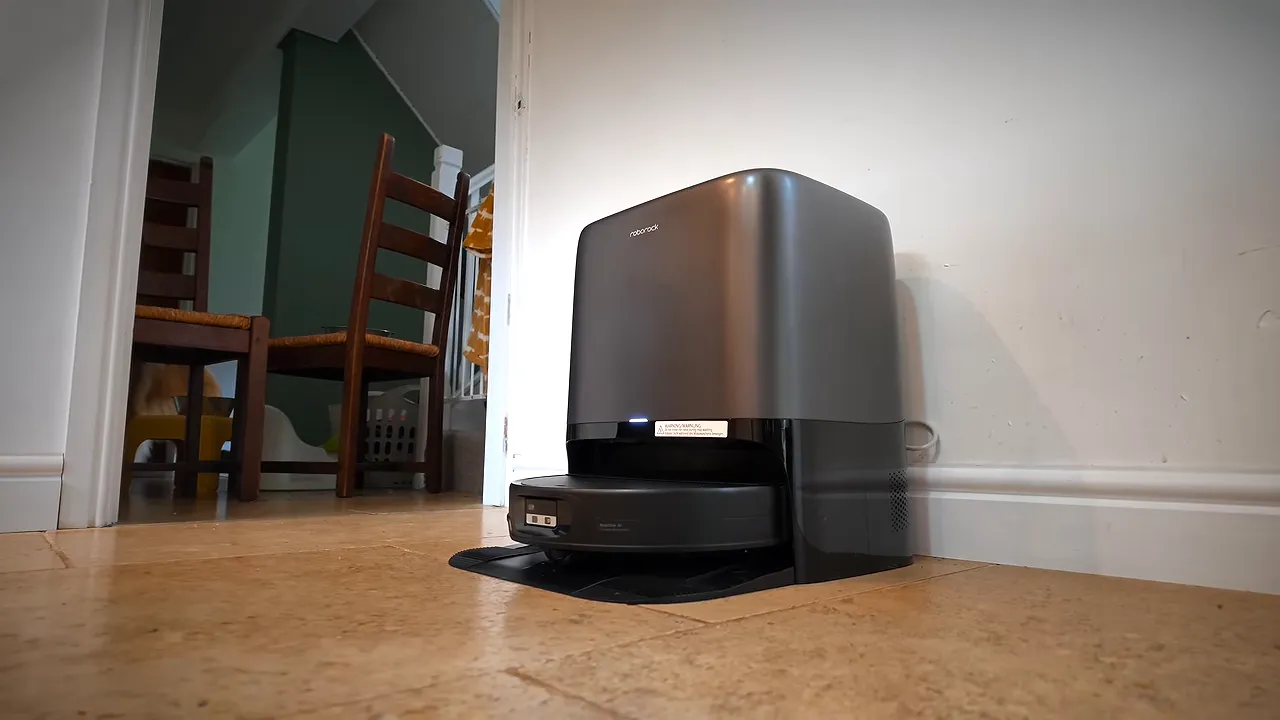
The capacity differences go in opposite directions:
- Dust bag: the Neo increases capacity to 2.7 litres, compared with 2.5 litres on the Saros 20.
- Dirty-water tank: the Neo drops to 3 litres, compared with 3.5 litres on the Saros 20.
A little more room for dust, a little less room for dirty water. Those are worth knowing, but neither changes my overall assessment of the two products.
What About the Saros 20 Sonic and Flow?
The Saros 20 family extends beyond these two robots. Roborock has also shown the Saros 20 Sonic and Saros 20 Flow, which have more distinctive mopping systems and different priorities.
At the time of my review, my understanding was that those versions were not available in the UK. The Saros 20 and Saros 20 Neo were the two relevant choices here.
Whether the others will arrive later is another question. For now, their existence does not change the central comparison: the Neo and regular 20 share an unusually large amount of their core experience.
Price and Value: Has Roborock Undercut Its Own Flagship?
At the time of my review, the Neo was available for £749. Compare that with the Saros 20’s £1,299 launch price, and the difference is substantial.
That is a comparison between the Neo’s review-time offer and the original model’s launch price, not a guarantee of what either costs today. Current pricing matters enormously here.
If the Saros 20 falls much closer to the Neo, its solid-state navigation becomes easier to justify. With a large gap between them, though, I struggle to see many people paying the extra purely for that sensor advantage.
Check the current Neo price before deciding, because an offer can change the argument rather quickly.
My confusion about Roborock’s product strategy is not a criticism of the Neo. Quite the opposite. Making this much flagship technology more accessible is excellent for buyers, even if it leaves the more expensive model nervously looking over its shoulder.
The Neo feels more like a sideways branch of the Saros 20 than a conventional budget downgrade. It is the younger, slightly aggressive sibling that has arrived with almost all the same abilities and a rather uncomfortable question about the family finances.
Verdict: Better Value, Not Universally Better Technology
The Saros 20 Neo is not technically better in every respect. For most buyers facing a substantial price gap, it is the better-value purchase.
The buying decision comes down to three situations:
- You already own a Saros 20: this is not an upgrade for you. Keep what you have.
- You want the more sophisticated navigation system: the regular Saros 20 still has an advantage, especially if its price moves closer to the Neo.
- You are replacing an older robot and want flagship cleaning features for less: the Neo is extremely compelling.
It is still an expensive piece of kit. Calling it more affordable does not magically make £749 pocket change.
But at the time of my review, I considered it the strongest suction-value proposition below £1,000, and the cheapest option among the five highest-suction robots I was comparing. More importantly, it backs up that headline specification with the brushes, lifting chassis, mopping features and dock functionality that make the overall package attractive.
The Neo does not replace the Saros 20. It makes much of the same experience available for less. Pound for pascals, that is a very persuasive argument.
Disclosure: Product links may be affiliate links, which can earn a commission on qualifying purchases. Products may be supplied free of charge, and commercial relationships may exist separately from the review. Opinions remain independent.


