Spending £400 on an office chair creates certain expectations. In my case, I rather expected to sit down and be enveloped by a cloud. The Secretlab Titan 2020 had other ideas.
It was firm when I bought it. Nearly nine months later, after sitting in it for close to eight hours a day on most days, it is still firm. But the thing that originally disappointed me has become one of the things I value most.
My SoftWeave Titan has held up remarkably well, and my back has been considerably happier than it was in my old IKEA chair. That does not make it perfect, nor does it answer the questions about upholstery peeling, warranty support and whether I should have bought something else entirely.
So here is the long-term picture: what has changed, what has not, and what I found when I looked beyond my own chair.
Quick Summary
- My SoftWeave Titan showed very little wear after nine months of regular, full-day use.
- The seat softened only fractionally and remained much firmer than I originally expected.
- My back felt considerably better than it had in my previous IKEA chair.
- Owner reports offered reasonable reassurance about support, although I never needed to claim myself.
An Independent Review, Not a Secretlab Promotion
This review is not paid for, sponsored or endorsed by Secretlab. There is no Secretlab affiliate link here, and no purchase link to one of its chairs.
That is worth making clear because my original Titan review was hardly a glowing endorsement. I criticised the firmness, questioned some finishing details and took issue with the conditions attached to extending the warranty.
When I later asked other owners about their experiences on Twitter, Secretlab noticed and emailed to ask how my Titan was doing and whether it could help with the update. I told the company that the chair was doing rather well, but that it would have to wait for my full assessment like everyone else.
A manufacturer getting in touch does not get it editorial control. The good bits and the irritating bits both stay.
My Original Problem: It Was Much Firmer Than Expected
The biggest surprise was always the seat. At this price, I had imagined something luxuriously soft. Instead, the Titan felt substantially firmer than anticipated.
My initial comfort assessment was around five or six out of ten. Another person trying it gave it a seven, which rather neatly illustrates how personal chair comfort is. I did like the pillow, but the overall experience was not what I had pictured when handing over the money.
Even then, though, there was an important distinction: the Titan did not feel as plush as I wanted, but my back felt better in it. My previous chair had been causing me real discomfort. That problem was not following me into the Titan.
Nine months of use has made that distinction much more important than the first impression.
Why I Did Not Buy a Herman Miller Aeron
Apparently, office-chair preferences are extremely tribal. One of the most persistent responses to my original review was that I should not have spent £400 on the Titan. I should have bought a Herman Miller Aeron instead.
When I looked, the new Aeron listing I found was £1,099. Call me tight-fisted, but suggesting a chair costing nearly three times as much is not quite the straightforward alternative people seemed to think it was.
There is also the small matter of appearance. The Aeron’s mesh aesthetic is not for me. To my eyes, it has a certain grandmother’s-knitted-tights quality. That is a matter of taste, not a technical assessment of its ergonomics.
Several people suggested buying one secondhand. I am all for buying used equipment and giving things another life, but an office chair occupied by someone else for eight hours a day, five days a week, crosses my personal threshold. Other people are perfectly happy with that. I am not.
None of this establishes that the Titan is a better chair than the Aeron. I have not carried out that comparison. It explains why a much more expensive new chair, or a used one I did not want, was not the answer for me.
The Warranty: Reassuring, With a Condition I Still Dislike
Under the terms offered for this Titan at the time of my review, the standard warranty was three years. It could be extended to five years by sharing a photograph of the chair on social media.
Three years is fine in itself. My objection is to making the extra coverage conditional on helping advertise the product. I would rather warranty protection stood on its own than required a promotional photograph.
I have not needed to make a warranty claim or contact support about a fault. That is good news for my chair, but it also limits what I can personally say about the claims process. To investigate that side, I looked through forums, owner reports and service reviews, and spoke to people who had dealt with the company.
The warranty details below describe the position I investigated for the Titan 2020, not a promise about the terms offered on every current model or in every country.
PU Leather Peeling Versus SoftWeave
One of the recurring complaints I found concerned PU leather cracking or peeling. That concern was part of the reason I chose SoftWeave fabric. My old PU leather IKEA chair had cracked over time, and I was not particularly keen to repeat the experience.
The complaints I found were concentrated in places such as Singapore and Malaysia. Secretlab had introduced a peeling protection scheme for those regions. At the time, I did not believe the same scheme was available in the UK.
Secretlab attributed the issue to environmental conditions in those markets rather than treating it as something expected to happen in places such as the UK or US. That was the company’s explanation, not something I independently tested.
The reports also appeared largely connected to earlier upholstery. Secretlab had moved to PRIME 2.0 PU leather, which it described as more durable. During my research, I did not find forum reports of the newer material cracking or peeling.
That was encouraging, but not proof that the issue had vanished forever. More importantly, my own nine-month durability experience is with SoftWeave, not PU leather.
Two Owners’ Experiences With Support
Mad’s Tech Reviews & Tutorials reported problems with the seat-base foam moving out of position and with the piston. My impression from his account was that getting assistance involved some back-and-forth and initial reluctance, but replacement parts were eventually supplied.
The other example came from Chris Colton of SeeSee. He owned two Game of Thrones edition Secretlab chairs. His House Targaryen chair was holding up well, while the House Stark chair developed damage on the back after roughly two or three months.
Chris was not sure whether the damage had occurred naturally or whether he had caused it by leaning the chair against something. He contacted Secretlab through its website, completed the contact form and had the issue assessed.
The company classified it as wear and tear, so it declined to replace the backrest free of charge. Instead, it offered a replacement back for $50.
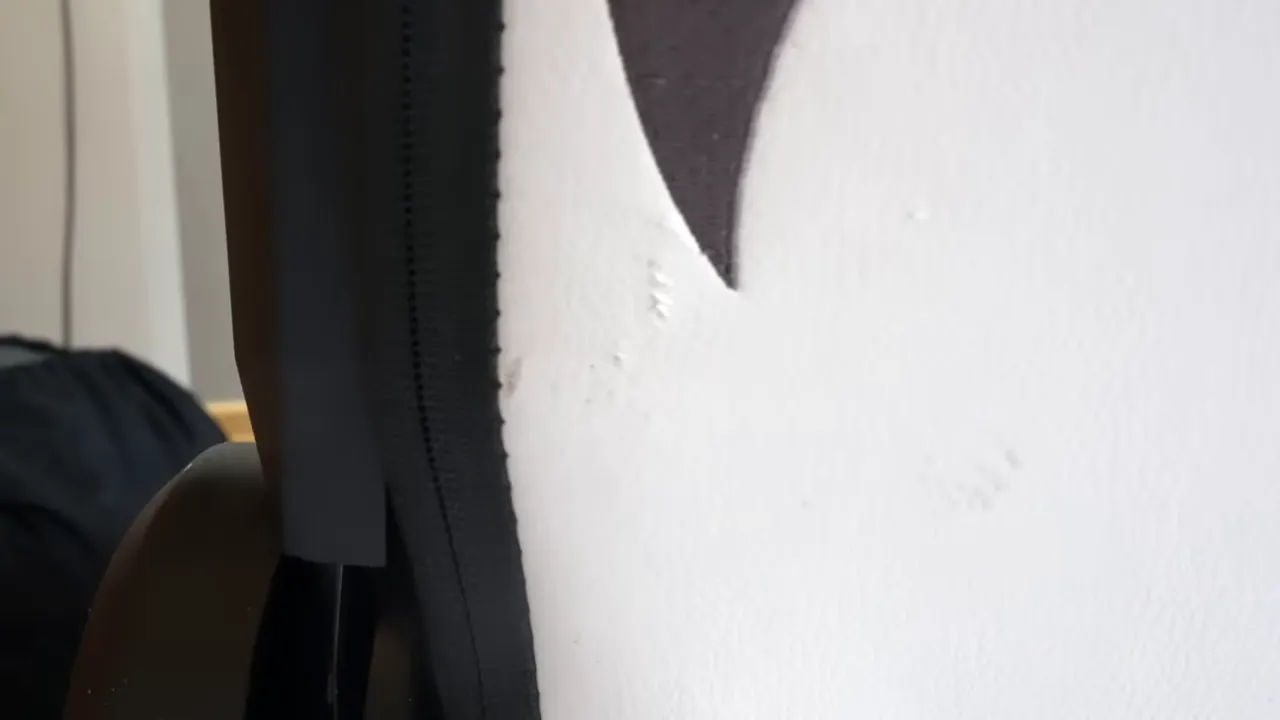
Would a free replacement have been preferable? Obviously. But $50 for a replacement backrest struck me as pretty reasonable, particularly when the cause was uncertain.
Replacement Parts and Overall Confidence
I also looked through the replacement parts listed on Secretlab’s website. The prices I could see generally seemed reasonable. Backrests and seat bases did not have visible prices, which I suspected reflected the range of models and finishes available, although I could not confirm that explanation.
Between those owner accounts and the generally positive service feedback I found on Trustpilot, I came away reasonably reassured.
Would I feel comfortable buying with the expectation that support would be available? Probably, yes. Would I guarantee that every claim will be straightforward or accepted? Absolutely not. Researching other people’s experiences is not the same as successfully making a claim myself.
How the SoftWeave Titan Has Worn After Nine Months
Before inspecting the chair, I deliberately did not vacuum or clean it. I wanted an honest look at the thing I actually sit in, not a freshly groomed showroom specimen.
There was dog hair. There were biscuit crumbs. There was also remarkably little evidence of the amount of time my posterior had spent planted on it.
Seat Base, Fabric and Stitching
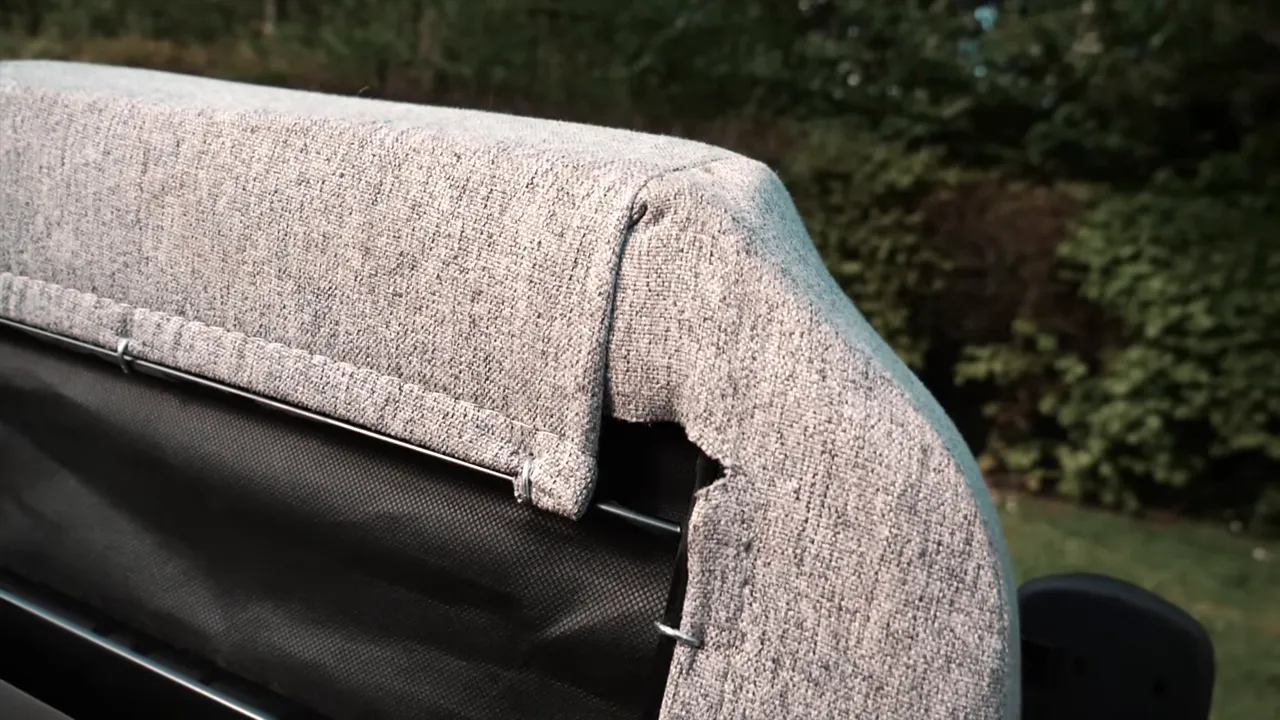
The seat base takes most of the punishment, yet it showed very little sign of use. The stitching remained undisturbed, with no obvious fraying or movement. The backrest stitching was similarly intact.
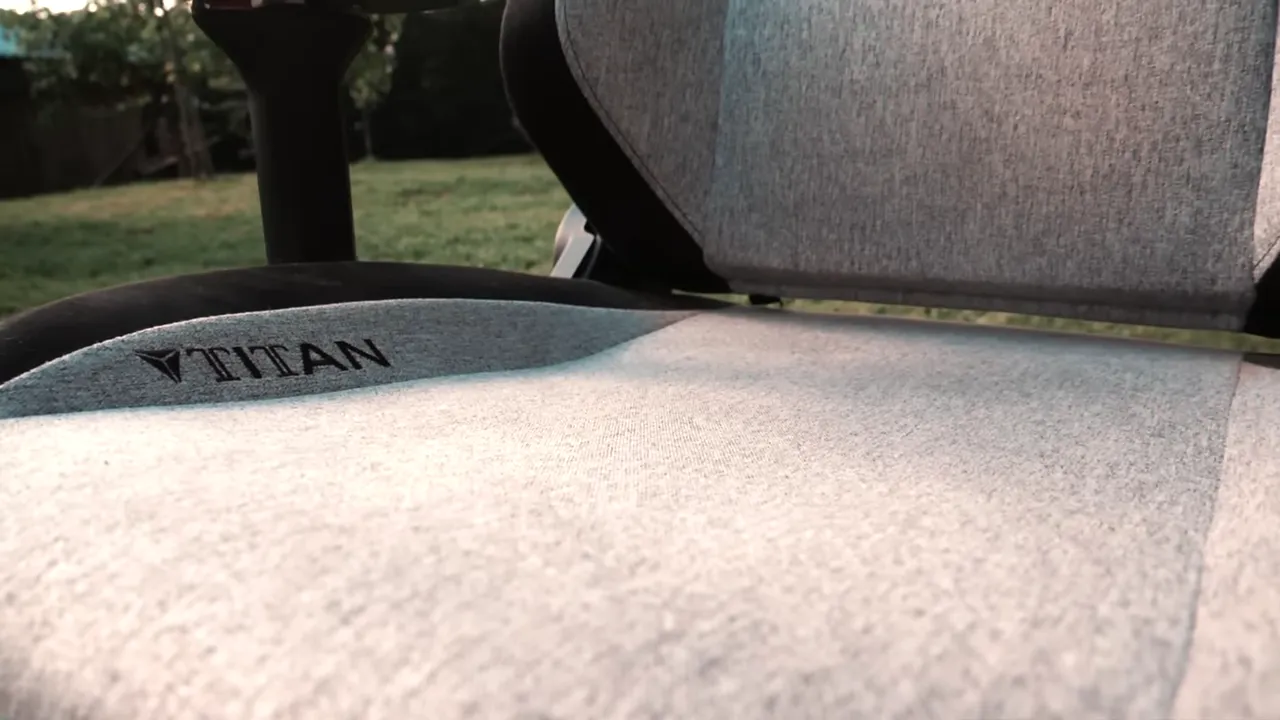
Across the upholstery, I found no tearing, staining, fraying or sagging. That is more than I can say for myself over the same nine months.
One detail I criticised originally was the cut fabric underneath the chair, which looked a little unfinished. It still was not a finishing detail I loved, but it had not changed or deteriorated.
Armrests and Wheels
The armrests remained in brilliant condition, if a little mucky. The wheels were the only parts showing obvious signs of use.
That needs some context: I had been rolling the chair over a bare stone surface with no protection. I cannot entirely blame the chair for that one.
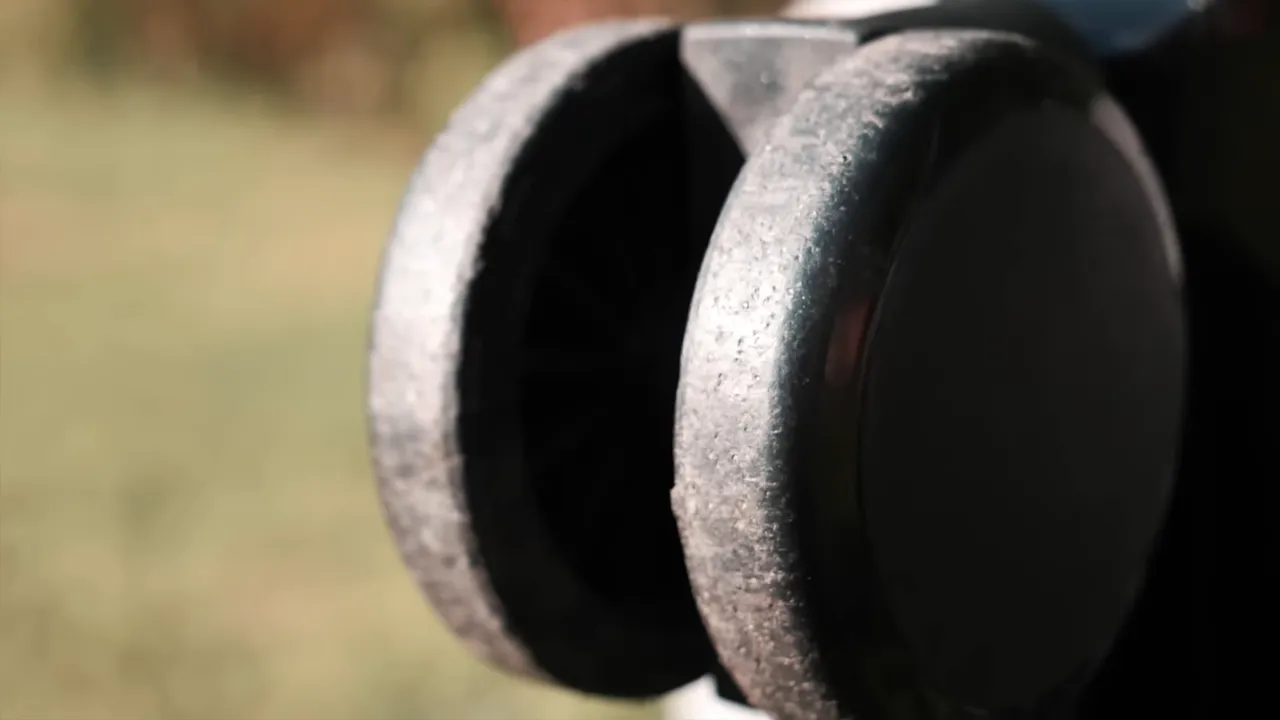
Overall, the build and upholstery had survived regular daily use exceptionally well. Nine months does not establish a lifetime, but it is a much more useful test than how impressive something looks straight out of its box.
Has the Titan Become Softer?
A tiny bit. And I really do mean tiny.
The cushioning had softened fractionally, but the underlying firmness was still very much there. If you buy one hoping it will turn into a pile of soft pillows after a few months, my experience gives you no reason to expect that.
What changed more was my appreciation of it. My old IKEA chair had been torturing my back. Since moving to the Titan, I had not experienced the same bad-back problem, and I felt its firmer support had helped enormously.
That is a personal result, not a medical guarantee. My happier back does not prove that firmness alone is responsible or that the same chair will suit everyone. For a broader reference when choosing and adjusting a workstation, the HSE’s display screen equipment guidance is useful alongside individual chair reviews.
The practical distinction is simple: softness on first contact and comfort over a working day are not necessarily the same thing. The Titan taught me that rather effectively.
Final Verdict: Do I Regret Spending £400?
Absolutely not.
The Secretlab Titan 2020 still is not what I originally expected from a £400 chair. It is much firmer than the luxurious cloud I had imagined. But after nearly nine months of substantial daily use, it had held its shape, kept its upholstery intact and proved far better for my back than the chair it replaced.
- Durability: My SoftWeave example had no tears, stains, fraying or sagging, with visible wear largely confined to the wheels.
- Comfort: It remained firm, with only a fractional amount of softening.
- Support: My back had been much happier, although that remains an individual experience.
- After-sales confidence: The reports I investigated were broadly reassuring, but I had not personally tested the warranty.
Would I have spent more on something else? Not on the basis of this experience. The Titan had been brilliant for me, and I was considerably more impressed with it after months of use than I was initially.
There was still a separate sizing question. At 6 feet 8 inches tall, I wanted to explore whether the XL would suit someone my size better, as well as assess the reportedly updated assembly process. That is a separate exercise from durability, covered in the Titan XL versus standard comparison.
For this chair, though, the conclusion is straightforward: I do not regret buying it. Just do not mistake “premium” for “soft”. If a cloud of pillows is what you want, the Titan may leave you sorely disappointed.


