A fridge that helps decide what to eat. An air conditioner that anticipates the weather. A washing machine that can explain what has gone wrong rather than leaving you staring at an error message. Midea brought a bloody impressive spread of smart home appliances to IFA 2025.
There was even a humanoid robot greeting people at the booth, which gave me my first opportunity to shake hands with one. Very cool, although the appliances were what I really wanted to investigate.
The core lineup revolves around four ideas: SmartMaster for AI assistance, SpaceMaster for greater capacity, EcoMaster for efficiency and XpressMaster for speed. Across them, the interesting question is not simply whether an appliance has AI. It is whether that intelligence takes a genuinely annoying job off your hands.
Quick Summary
- SmartMaster applies AI to meal planning, cooking assistance, climate control and appliance troubleshooting.
- SpaceMaster prioritises greater usable capacity within familiar appliance dimensions.
- EcoMaster focuses on energy optimisation, with Solstice AC designed to anticipate weather changes.
- XpressMaster emphasises speed, demonstrated with a claimed eight-second soup-boiling capability.
Table of Contents
- SmartMaster: Appliances That Take Some of the Thinking Out of Housework
- SpaceMaster: More Room Without a Bigger Appliance
- EcoMaster: Using Intelligence to Reduce Energy Use
- Built-In Appliances With a Properly Sleek Finish
- XpressMaster: Soup in Eight Seconds?
- A 28-Inch Heat Pump Washer-Dryer
- R290 Air Conditioning and Midea’s Sustainability Push
- The Bigger Picture: A Home That Needs Less Managing
SmartMaster: Appliances That Take Some of the Thinking Out of Housework
Midea’s SmartMaster range puts AI into everyday tasks, from working out dinner to looking after clothes. What caught my attention was the breadth of the approach. This was not just one clever appliance sitting on its own.
A Fridge That Recognises Ingredients and Suggests Meals
The SmartMaster refrigerator starts with a neat convenience: tap-to-open doors. It is similar to the automatic-opening fridge I encountered last year, but ingredient recognition is the more interesting development here.
Midea says the fridge can identify more than 100 types of ingredient and use that information to recommend meals, including instructions for making them.
In the demonstration, I selected fish, carrot and grapes on the accompanying interface, then started the recommendation process. The idea is that recognition of the fridge’s contents gives the AI a useful starting point for suggesting what to cook.
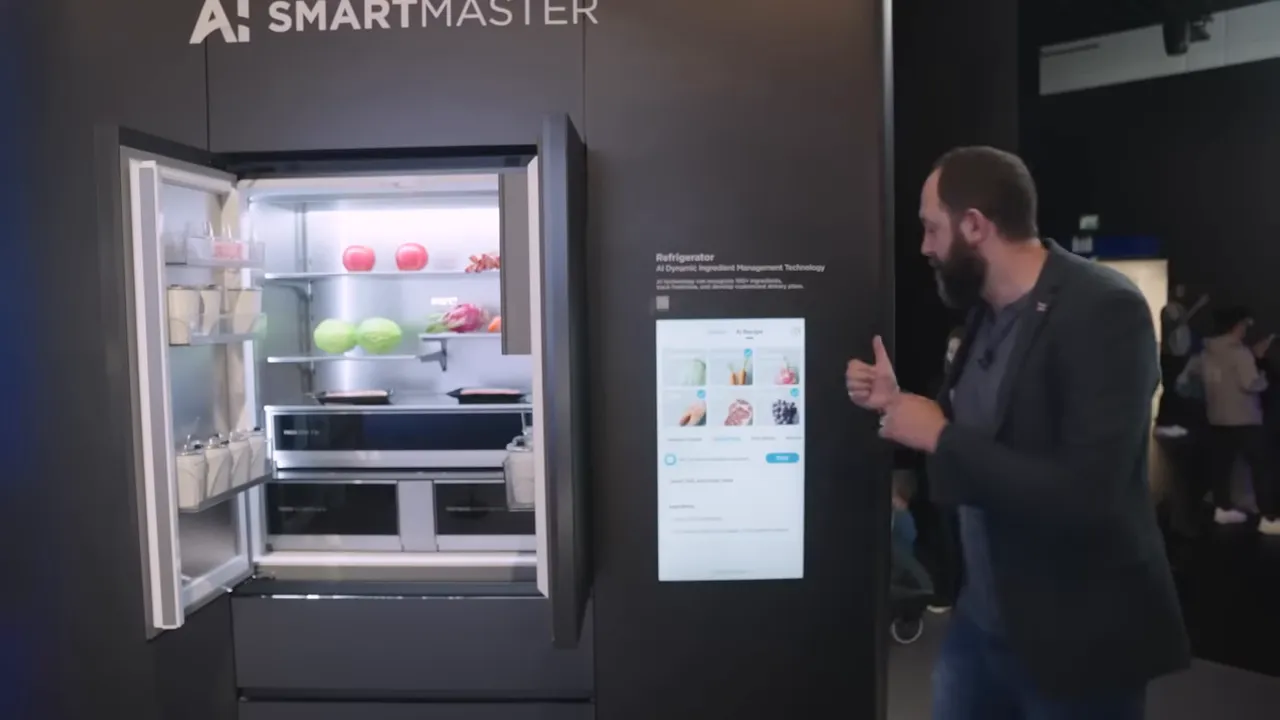
That is much more appealing to me than standing in front of an open fridge wondering what on earth to do with everything. It also gives you a chance to use ingredients rather than leave them sitting there until they need throwing away.
The fridge can also track nutrition plans and offer advice around them. Together, those features point towards something more useful than a fridge with a screen: help connecting what you have, what you want to eat and how to make it.
An AI Oven and an Extractor That Responds Automatically
The built-in oven follows a similar principle. Midea demonstrated food-recognition technology intended to understand what goes inside and help cook it correctly, rather than leave you to turn dinner into charcoal.
Pair that with the fridge’s meal suggestions and nutrition guidance, and you can see the attraction. There is less guesswork between finding ingredients and getting something edible onto a plate.
Then there is the AI extractor. It is designed to detect smoke, steam and airborne cooking particles, deploy automatically and adjust its extraction strength to suit the conditions.
Frying something that produces a lot of steam? The extractor is supposed to respond without you having to stop and fiddle with it. These are the little interventions that could make a kitchen easier to use.
I am not someone who naturally enjoys cooking. An arrangement that removes some of the decisions, helps prevent burnt food and sorts out the extraction could actually change that. Which, frankly, is saying something.
Air Conditioning You Can Talk To
SmartMaster also extends to air conditioning. In the UK, we tend not to use air con that much, then spend every heatwave complaining about how hot it is. I am planning some form of air conditioning for the new studio I am building, so this was particularly relevant.
The system on display was presented as using AI to interpret data and automatically adjust conditions towards a comfortable temperature. But the more unusual feature was conversational control.
Midea says you can speak to it and it can respond to cues in your tone, using those alongside the interaction to adjust the environment. That is an intriguing application of large language models, or LLMs, beyond simply answering questions.
The exciting prospect is an appliance that understands a more natural request instead of requiring you to think in settings and numbers. How consistently it interprets those cues is something for longer-term testing, but it was a fascinating direction to see demonstrated.
Laundry Guidance and Help With Faults
A washer-dryer combo and robot vacuum rounded out this part of the display. Here, the AI story was about both day-to-day assistance and troubleshooting.
For laundry, the aim is to help you wash clothes correctly, reducing the chance of damaging them and helping you get more wear from them. That is a practical use for intelligence in an appliance: fewer ruined garments, not merely another feature to navigate.
The AI assistant was also demonstrated as a way to understand faults. If a clogged filter triggers an error message, for example, you can ask the assistant what is wrong and how to fix it.
An error code tells you there is a problem. An explanation helps you do something about it. That distinction makes this one of the more useful applications of appliance AI I saw.
SpaceMaster: More Room Without a Bigger Appliance
SpaceMaster tackles a different household frustration: needing more capacity when there is nowhere to put a larger machine.
The premise is straightforward. Keep the appliance in a familiar-sized form factor, but find more usable space inside it.
Up to 65 Litres More Refrigerator Capacity
The combination fridge-freezer looked relatively normal from the outside. Open it, though, and there was a bit of a Doctor Who moment. Somehow, Midea had found room for rather more on the inside.
The stated improvement is up to 65 litres more capacity than the previous generation, enabled by an ultra-slim side-wall profile.
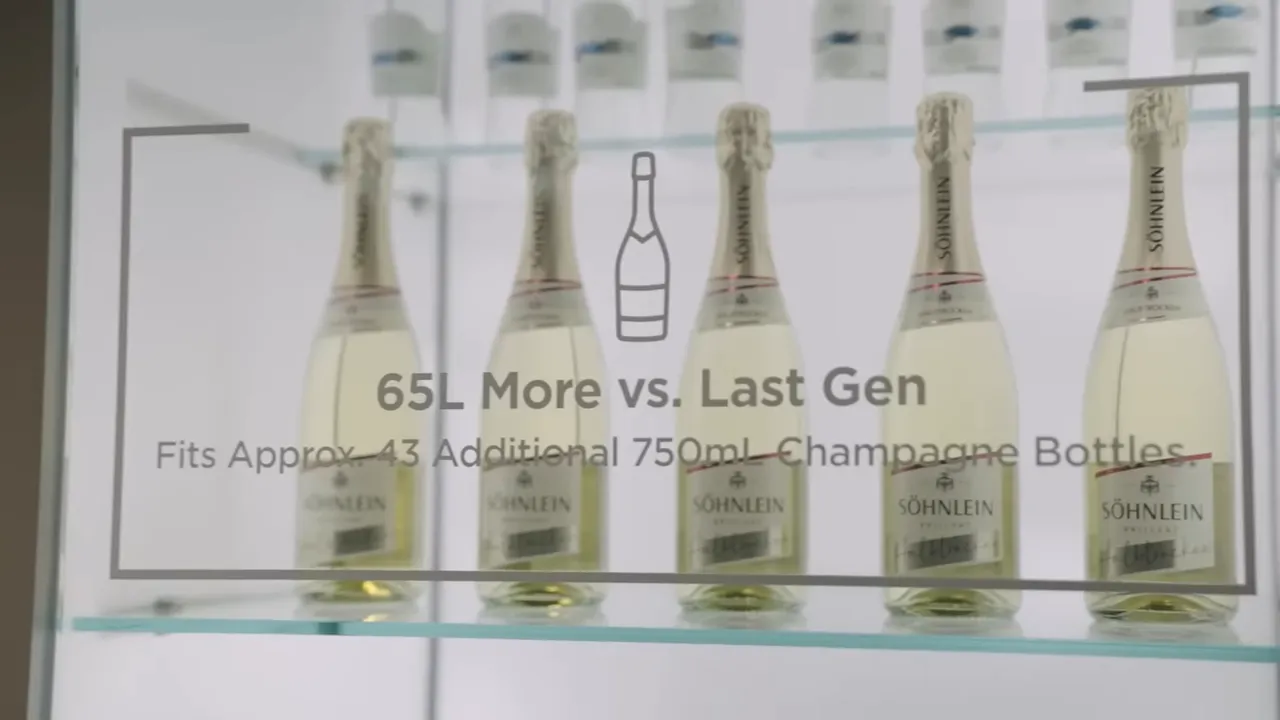
If your kitchen layout fixes the space available for a fridge-freezer, that sort of improvement makes immediate sense. More storage is useful. Having to redesign the kitchen to get it is rather less useful.
An 88-Litre Laundry Drum
The laundry display applied the same thinking to a front-loading machine with an 88-litre drum, presented in a familiar-sized appliance footprint.
The drum was enormous. It is worth being clear that 88 litres describes its volume, rather than a laundry load rating in kilograms, but the physical space was impressive.
SpaceMaster is perhaps the easiest range to understand without any explanation of AI at all: make better use of the space the appliance already occupies.
EcoMaster: Using Intelligence to Reduce Energy Use
Some EcoMaster appliances shared a similar aesthetic with SpaceMaster, but the priority here was electricity consumption rather than internal capacity.
Midea presented the range as using AI to optimise operation and reduce energy use. Around the display, some products carried claims of up to 60% savings against their stated conventional comparisons.
That is a sizeable claim, although it should not be read as a blanket saving across every EcoMaster appliance. The individual product and comparison matter. What interested me was the underlying goal: use intelligence to avoid wasting energy while still doing the job properly.
Solstice AC: Anticipating the Weather
My standout from EcoMaster was the Solstice air conditioner.
Rather than simply reacting after the room becomes uncomfortable, it was described as using AI to anticipate weather conditions and adjust its operation in advance. The stated temperature-control figure was within 0.3°C.
The appeal is a steadier indoor environment. If the system can anticipate a change, it can prepare for it rather than constantly chase the temperature afterwards.
Midea’s pitch is that this adaptive approach can also reduce unnecessary heating and cooling, helping save energy while keeping the room comfortable. For a studio where I want to get on with working rather than keep adjusting the air con, that is a compelling proposition.
Built-In Appliances With a Properly Sleek Finish
Not everything that impressed me depended on AI. Midea’s built-in lineup also looked fantastic.
The dark appliance bank had such a clean finish that I initially could not work out how to open one of the doors. The answer was a button. Obvious once somebody tells you, admittedly.
There is a real appeal to removing a large handle that sticks out into the room, particularly if it is exactly where your side tends to meet it as you walk past.
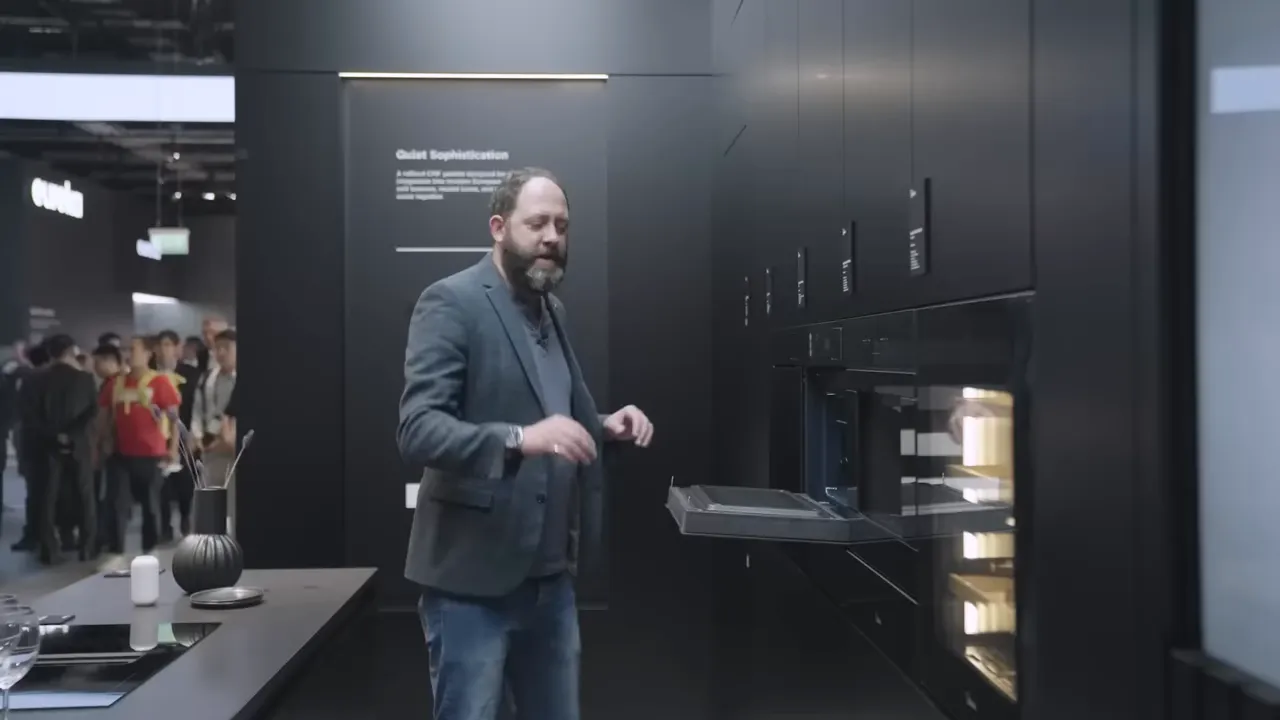
The display included a steamer and illuminated wine storage. The steaming option particularly caught my attention as another way of preparing food without everything ending up burnt and crispy.
Sometimes good appliance design is simply about making everything sit together neatly. This lineup managed that beautifully.
XpressMaster: Soup in Eight Seconds?
The speed-focused XpressMaster demonstration came with a rather bold claim: an appliance capable of bringing soup to the boil in eight seconds.
Eight seconds. That was the sort of figure that made me stop and check I had heard it properly.
I tried the soup, and it was absolutely piping hot. That tasting does not establish every detail of the heating process, but it certainly delivered on the hot-soup part of the demonstration.
It was a memorable example of the range’s focus on speed, and a welcome opportunity to eat something while exploring a very large appliance stand.
A 28-Inch Heat Pump Washer-Dryer
Another interesting find was a 28-inch heat pump washer-dryer.
The heat pump was the key detail. Midea presented the machine as combining efficient operation with performance intended to match or improve upon traditional washer-dryers.
For some useful background on the technology, the US Department of Energy’s guide to heat pump clothes dryers explains the energy-saving principle behind this approach to drying.
This was a show-floor introduction, not a full laundry test, so I would want proper time with the machine before judging that performance claim. Even so, seeing heat pump technology in this washer-dryer format made it one of the more interesting laundry products at the booth.
R290 Air Conditioning and Midea’s Sustainability Push
Midea also devoted space to its R290 air-conditioning work, presenting itself as the world’s number one R290 air-conditioner company.
Refrigerants are not my specialist subject, but the display highlighted R290 as a natural refrigerant and a significant part of the company’s sustainability efforts.
The figures shared were substantial: more than 8.4 million units sold and a claimed associated reduction of 4.4 million tonnes of CO2 emissions.
Those are Midea’s reported figures, rather than calculations I independently verified. They nevertheless help explain why the refrigerant story had such a prominent place alongside the AI and energy-efficiency demonstrations.
The Bigger Picture: A Home That Needs Less Managing
Beyond the headline products, there were air fryers, microwaves, dishwashers and a huge selection of other kitchen appliances. Midea had an enormous amount covered.
What tied the most interesting products together was a practical ambition: take some of the work out of managing a home. Help use the food already in the fridge. Explain a fault. Fit more storage into the same space. Keep a room comfortable without constant adjustment.
There are plenty of claims here that deserve proper testing beyond a trade-show demonstration, especially around energy savings and AI behaviour. But as a taste of where smart home appliances are heading, this was genuinely exciting.
The best idea on the stand was not AI for its own sake. It was appliances using that intelligence to ask less of you. Even, potentially, making me enjoy cooking. Now that would be an achievement.
You can find more of my discoveries in the IFA 2025 coverage playlist.


