The most interesting thing about Anker Soundcore’s latest headphones isn’t a bigger driver, a flashier case or another vaguely impressive number printed on a box. It’s a tiny processor called THUS, and it has produced some of the most remarkable call noise cancellation I’ve used in a very long time.
But there’s a slightly awkward consequence of putting that technology into several different headphones. When exceptional call clarity is no longer reserved for one model, which pair are you supposed to buy?
Having tried the Liberty 5 Pro, AeroClip 2, Liberty Buds 2 and Space 2 Pro, my answer is increasingly about how you want to wear your headphones and where you intend to use them. There’s a clear role for each, from barely noticeable open-ear listening to shutting out the corporate buzzword bingo of a shared office.
Quick Summary
- THUS brings exceptional outgoing call noise suppression to several distinct Soundcore headphone designs.
- The Liberty 5 Pro are my all-round pick, while Liberty Buds 2 prioritise a secure fit.
- The AeroClip 2 offer outstanding comfort and open-ear awareness, but lack active noise cancellation.
- The Space 2 Pro combine comfortable over-ear wear, noise cancellation and clear calls for working environments.
Table of Contents
- Why the Anker THUS Chip Matters
- Liberty 5 Pro: The Best All-Round Starting Point
- AeroClip 2: My Pick for Comfort and Open-Ear Listening
- Liberty Buds 2: The Best Choice for a Secure, Low-Profile Fit
- Space 2 Pro: The Best Over-Ear Option for Work and Isolation
- Which Soundcore Headphones Would I Choose?
Why the Anker THUS Chip Matters
THUS is a small, low-power neural-network audio processor. It takes environmental sound captured by the headphones’ microphones and processes it locally using AI.
That supports two related but importantly different jobs:
- Active noise cancellation: reducing the outside noise you hear, on models that support ANC.
- Call noise cancellation: removing environmental noise from your microphone audio so the person you’re speaking to can hear your voice more clearly.
That distinction matters enormously with the AeroClip 2. They don’t have ANC for your ears, but they still clean up your outgoing voice. You can hear the world around you without necessarily broadcasting all of it to the person on the other end of a call.
Less commuting for your data
The clever bit is that THUS performs inference inside its memory, rather than continually shuffling data between separate processing and memory components.
Think of it as the difference between commuting to work and working from home. One involves dragging yourself out of bed, travelling to a station, getting stuck somewhere deeply irritating and eventually arriving exhausted. The other involves rolling out of bed and landing in your office chair.
Everything you need is already under one roof. Less travelling, less wasted time.

In principle, that saves both power and time. For me, the speed is the more important part of the experience. Running the AI model locally allows the headphones to respond extremely quickly as environmental noise changes.
Anker puts the processing rate at up to 384,000 times per second and claims 150 times the computing power of previous-generation devices without THUS.
Those are manufacturer figures, not measurements I’ve independently verified. I have absolutely no scientific way of confirming that 150-times claim. Ordinarily, I’d be filing that sort of number in the marketing-jargon drawer.
However, the real-world microphone tests were rather harder to dismiss.
Liberty 5 Pro: The Best All-Round Starting Point
The Liberty 5 Pro, alongside the Pro Max variant, introduced me to THUS. At the time, that made them the immediate recommendation if you wanted this level of call noise suppression. Now that the technology has spread, their role is more straightforward: they’re the bread and butter of the range.
They’re conventional in-ear headphones with stabilising fins to help keep them secure. That extra support is welcome if your day involves more physical activity than sitting perfectly still and answering emails.
They’re also the only option in this comparison with a screen on the charging case. It gives them a little extra functionality and a distinctive identity, although the central appeal is that they do what you expect a good pair of Soundcore in-ear headphones to do, sometimes rather better than expected.
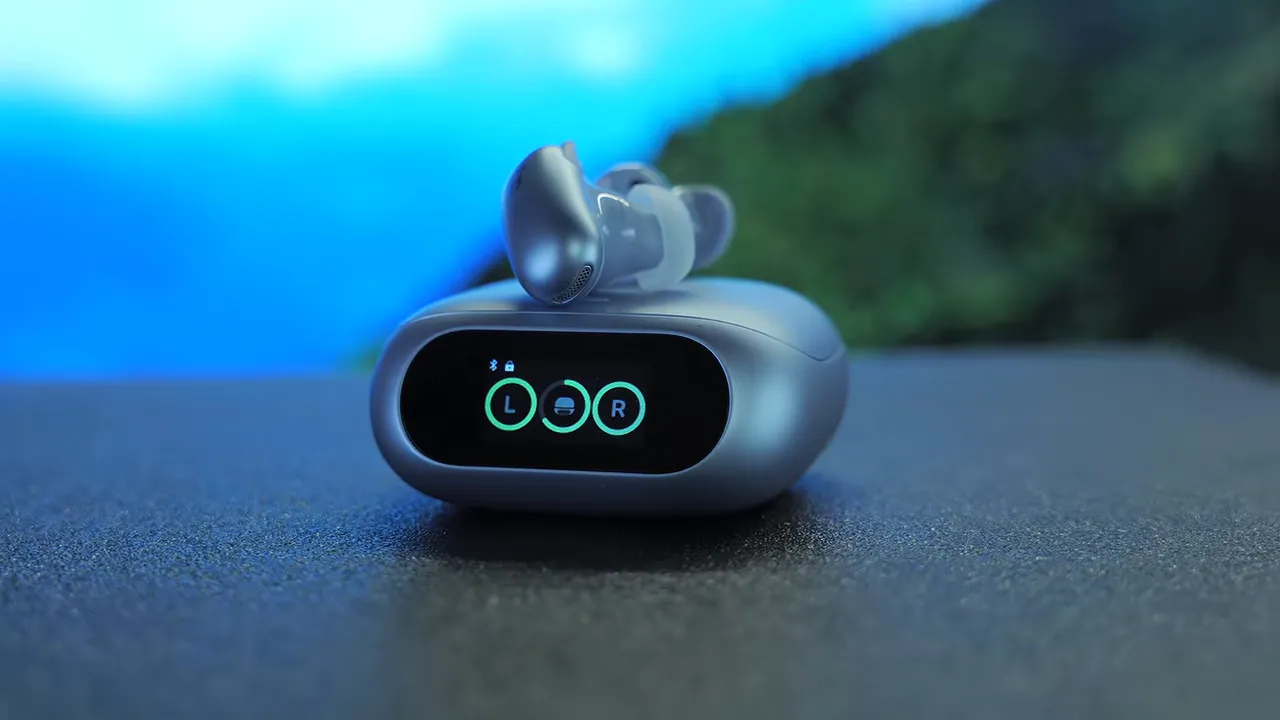
The waterfall test that changed my mind
To give the call processing something properly unpleasant to deal with, I took the Liberty 5 Pro to Water-Break-Its-Neck in Mid Wales. A waterfall seemed a reasonable starting point for a test I didn’t expect them to pass particularly well.
Then I added a Soundcore boombox playing 1970s disco at full volume. Because apparently a waterfall wasn’t sufficiently unreasonable on its own.
Recording directly through the earbuds’ microphones, my voice remained remarkably isolated. The waterfall and music that were obvious in the separate camera recording were effectively absent from the earbud recording.
This was a test of what the microphones sent out, not proof that I personally couldn’t hear the waterfall. It’s an important distinction, and it’s the call performance that left me so surprised.
The Liberty 5 Pro also received Guinness World Records recognition for call clarity in noisy environments. The AeroClip 2 and Space 2 Pro subsequently received recognition in the open-ear and over-ear categories respectively. Those are category-specific achievements, rather than a reason to assume every model behaves identically.
My full Liberty 5 Pro and Pro Max review goes into more detail. For this comparison, they remain my default recommendation for someone who wants a strong all-round pair of in-ear headphones without a particularly specialised requirement.
AeroClip 2: My Pick for Comfort and Open-Ear Listening
The AeroClip 2 are the follow-up to the original AeroClip, which were already a very pleasant surprise. Their appearance is still going to be a bit Marmite. Clipping your headphones around the outside of your ears is not exactly the traditional approach.
But there’s a very good reason I’m fond of them: they’re perhaps the most comfortable style of headphones I’ve used.
Comfort is personal. Your ear shape and size may produce a completely different result. For me, though, they’re so light and unobtrusive that after a while I almost forget they’re there. Hours of use become remarkably easy.
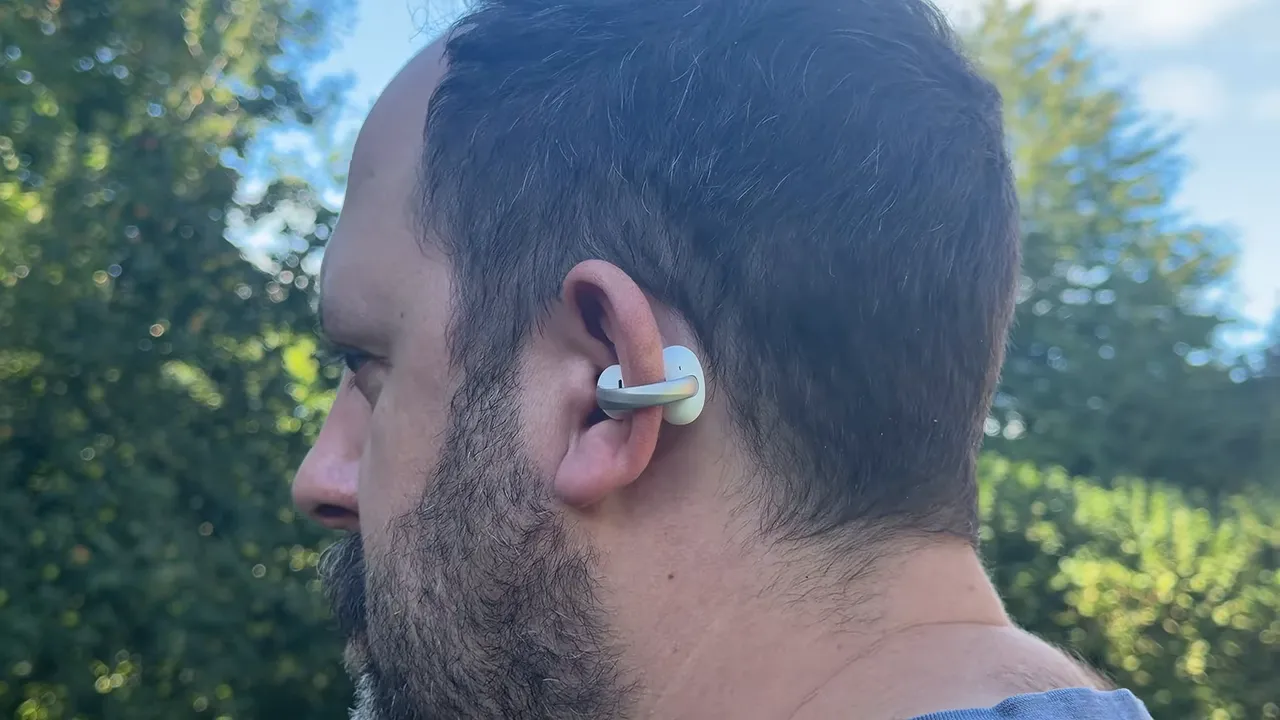
The open-ear design also makes sense when you need to remain aware of your surroundings. Rather than sealing your ear canal, the earbuds leave it open.
Sound quality is far better than I’d expect from this form factor. They handle a broad range of listening surprisingly well, but one particular use caught me completely off guard.
They’re unusually good for ASMR
If you experience ASMR, or autonomous sensory meridian response, certain sounds can trigger a pleasant tingling sensation. Some people associate similar feelings with haircuts, massages or someone gently stroking their head. For people like me, audio can do it too.
Yes, describing it does make it sound a bit odd. Think of it as the pleasant opposite of fingernails scraping down a chalkboard.
The AeroClip 2’s presentation makes ASMR particularly effective for me. Sounds feel as though they’re happening around my ears, rather than being delivered straight into them. That changes the experience more than I expected.
If ASMR is a regular part of your listening, these would be my first choice from this group.
No ANC, but extraordinary call cleanup
The obvious trade-off is that the AeroClip 2 have no active noise cancellation. If your main objective is to shut out the outside world, they’re the wrong tool.
What they retain is THUS-powered call processing, and that’s impressive considering the physical design. There’s no stalk pointing towards your mouth, and part of the earbud sits behind your ear. It hardly looks like the ideal microphone arrangement for clear calls.
Yet when I recorded through them while mowing the lawn with music playing from the boombox, the outgoing audio stripped away the surrounding racket remarkably well. Switching to the iPhone’s microphones made it obvious how much noise was actually present.
That’s the appeal here: an open, comfortable fit for you, without forcing the person you’re speaking to to share your entire acoustic environment.
Liberty Buds 2: The Best Choice for a Secure, Low-Profile Fit
The Liberty Buds 2 represent the biggest design departure of these updates, and they’re the pair I have the most mixed feelings about.
The previous model used a semi-in-ear design, a short stalk and stabilising fins. The new version is fully in-ear, removes the stalk and uses wider fins.
I rather liked the old approach. Personally, I tend to find semi-in-ear headphones more comfortable for longer sessions, so it filled a useful gap for me.
But the new design has a very persuasive advantage: stability.
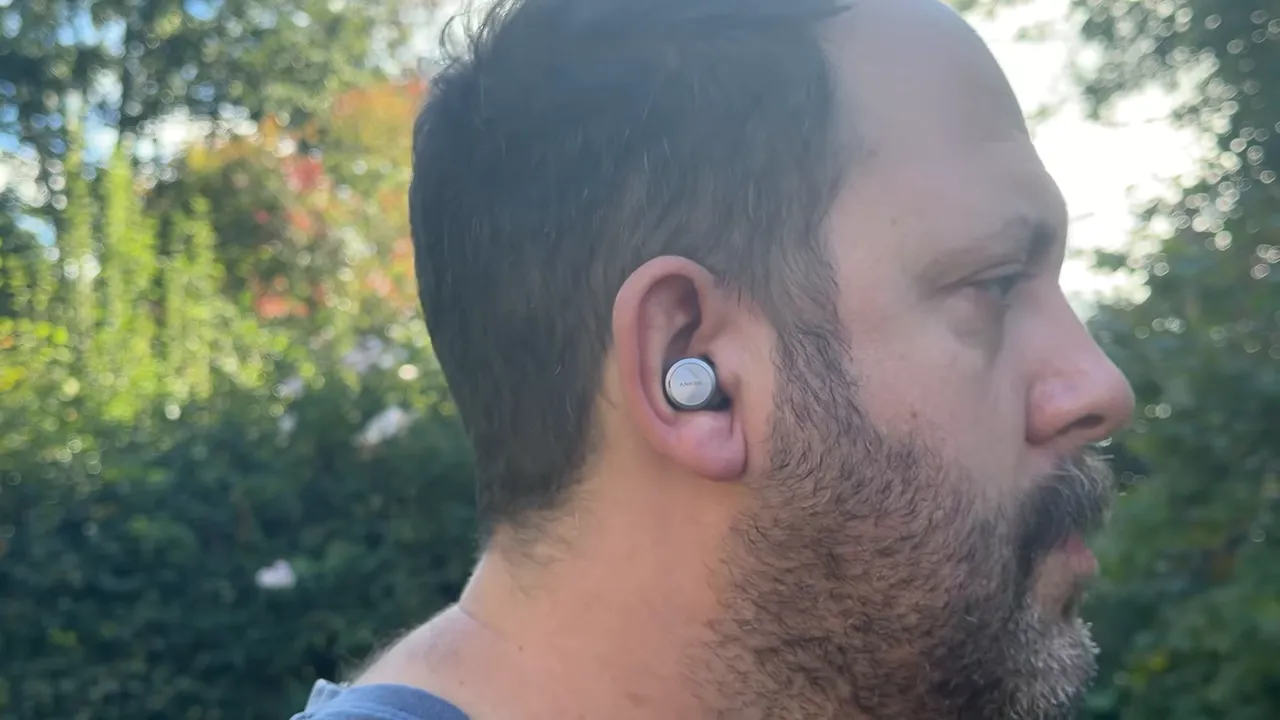
The Liberty Buds 2 are slightly lighter than their predecessors and sit almost flush within the outer ear. There’s much less sticking out to catch on something.
I’ve lost count of the number of times I’ve knocked a stemmed earbud loose with a large coat hood, a scarf or while putting on and removing glasses. A stalk gives all those things a convenient little lever to hit.
Removing it, then adding broader stabilising fins, makes these far less susceptible to accidental dislodgement. If keeping your earbuds in place throughout an active day is your priority, this is the design I’d lean towards.
Strong noise cancellation without the stalk
With THUS inside, the Liberty Buds 2 also deliver the excellent call cleanup and noise cancellation that make the Liberty 5 Pro so appealing.
My microphone test involved sanding a piece of wood while music played nearby. Once again, the earbud recording isolated my speech remarkably well, while the iPhone recording exposed the much noisier reality.
So although I miss the older semi-in-ear fit, I can absolutely see the logic of the change. You’re getting a more secure, compact design without giving up the central processing benefits of the newer range.
Space 2 Pro: The Best Over-Ear Option for Work and Isolation
At the time of testing, the Space 2 Pro were Soundcore’s only over-ear headphones with THUS inside. Quite simply, I think they’re astounding.
They’re among the most capable over-ear headphones I’ve tested for working environments, largely because they combine three things that matter together: long-session comfort, effective ANC and exceptionally clear outgoing calls.
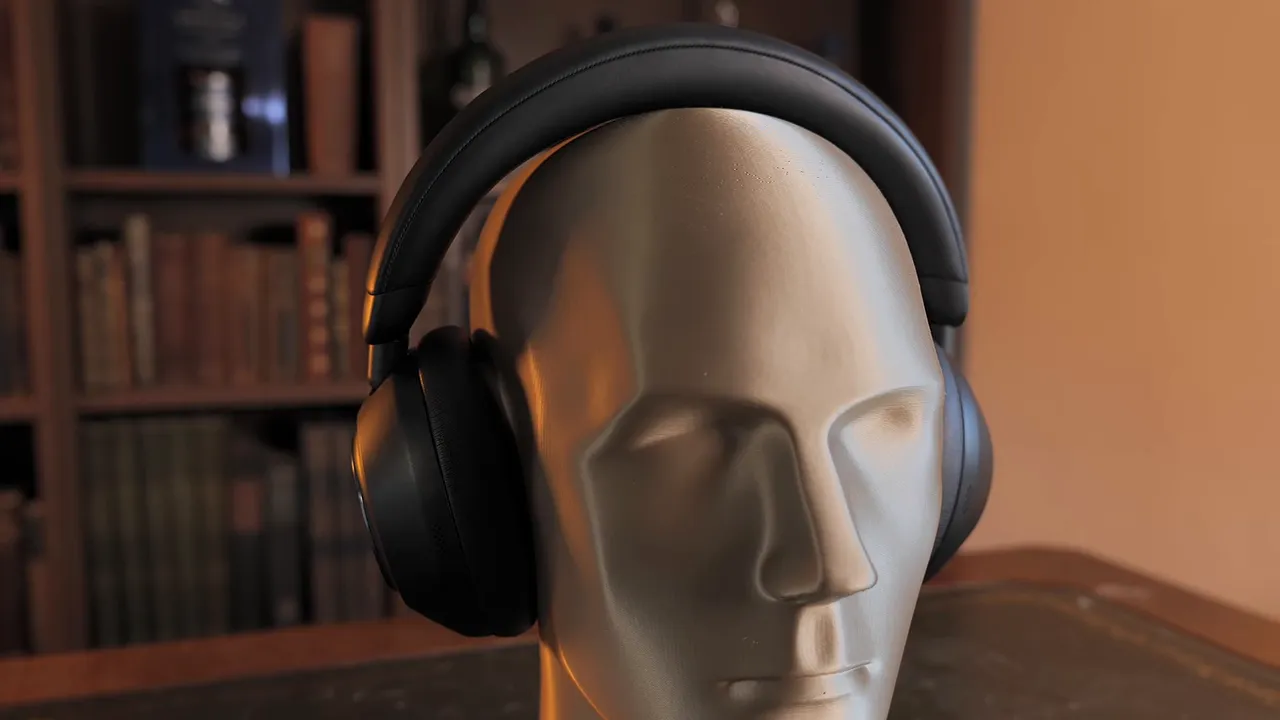
For comfort, I’d place them just below the AeroClip 2. That’s mostly because I can practically forget the AeroClip are attached to me. With a full pair of over-ear headphones, you’re always going to know there’s something on your head.
The Space 2 Pro have a massive advantage, though: they can help you stop hearing the room.
An antidote to shared-office noise
Their eight-microphone noise cancellation system works with THUS to suppress the surrounding environment. That makes them a much more natural choice for a shared office than open-ear earbuds.
If your working day is soundtracked by corporate buzzwords and reheated LinkedIn wisdom, there is quite a lot to be said for putting on headphones and making it all considerably less audible.
They let you concentrate on your work. Or, at the very least, on looking convincingly as though you are.
The other half of the equation is being able to take calls in that same noisy space without sending the whole room down the line. In my outdoor microphone test, I spoke beside a car with its engine being revved while music played nearby. The headphone recording kept my voice strikingly clear compared with the iPhone recording.
That combination makes the Space 2 Pro an extremely compelling work companion. In my opinion, they’re the best over-ear headphones Anker has made so far.
Which Soundcore Headphones Would I Choose?
The arrival of THUS across these different designs has made this less of a contest to identify one obvious winner. It’s now much more a case of horses for courses.
- Choose the Liberty 5 Pro for the best all-round in-ear option. They’re the natural starting point if you want a conventional design, strong performance and the extra functionality of the screen-equipped case.
- Choose the AeroClip 2 for comfort and awareness. They’re my favourite for barely noticeable wear and ASMR, provided you don’t need ANC.
- Choose the Liberty Buds 2 for stability. Their compact, stemless shape and broader fins make them less vulnerable to hoods, scarves and everyday knocks.
- Choose the Space 2 Pro for comfortable over-ear isolation. They’re the pair I’d pick for longer working sessions when I want both quieter surroundings and clear calls.
Prices and discounts vary, so a fixed price comparison could become unhelpful rather quickly. You can check current listings for the AeroClip 2, Liberty Buds 2 and Space 2 Pro to see how they stack up when you’re ready to buy.
Product links may be affiliate links, meaning qualifying purchases may earn a commission. Products may have been supplied free of charge, and commercial relationships may exist separately from the review. My opinions are not for sale.
Across the group, I think the performance represents outstanding value. The shared chip doesn’t make the headphones interchangeable, but it does mean you can choose the shape that suits your life without assuming that clear calls are reserved for one particular design.
And that’s the real achievement. Behind the slightly ridiculous computing claims is a practical improvement that was obvious beside a waterfall, a lawnmower, a sander and a revving car. Call it clever engineering. After using it, I’m still rather tempted to call it alien technology.


