Autumn is my favourite time of year. Treacle toffee, fireplaces, orange leaves, crisp misty mornings. All excellent. But it also brings two rather useful opportunities to pick up cracking tech for less before Christmas: Amazon’s autumn Prime Big Deal Days and Black Friday.
Black Friday may be the bigger shopping event, but the autumn Prime Day deals are certainly not something to discount. No pun intended.
I’ve been checking back on products I’ve recently tested, alongside a few interesting bits of kit I’m planning to investigate. The result is a shortlist covering earbuds, smart home security, portable power and a desktop charger that has become ridiculously useful in the studio. There’s also one decidedly non-tech recommendation at the end.
The sale dates highlighted for this October 2026 event are 6 and 7 October. Some offers were expected to start early. Treat the prices below as the advertised deals I found rather than a guarantee of the current checkout price, particularly where I only have US pricing.
Product links may be affiliate links, which can earn me a commission on qualifying purchases. Products may have been supplied free of charge, and commercial relationships may exist outside reviews. None of that buys my opinion.
Table of Contents
- Soundcore Liberty 5 Pro: Earbuds with Astonishing Call Noise Reduction
- Aqara G410 Doorbell: A Smart Home Hub Hiding in the Chime
- Bluetti Elite 300: A Compact Power Station with Serious Capacity
- UGREEN Nexode Pro 300 W: The Charger That Replaced My Other Chargers
- Tapo C675D Kit: Two Lenses That Both Record in 4K
- Amazon Echo Deals: A Simple Route into Smart Home Automation
- One Non-Tech Detour: Laphroaig 10 Year Old
- Which Deals Would I Prioritise?
Soundcore Liberty 5 Pro: Earbuds with Astonishing Call Noise Reduction
Advertised US deal: $169 down to $135.
The Soundcore Liberty 5 Pro earbuds are quite simply stupidly good. We test plenty of headphones in the studio, yet these are the ones I keep returning to.
There are some lovely design touches. Small fins help the earbuds stay put, while the charging case has a screen for checking the battery status of both the case and the earbuds. It also gives you access to noise cancellation modes and levels, alongside extras such as a remote camera trigger.

There’s also a Max version with a larger screen and additional AI recording features. Double-tapping its case lets you record directly to it, with AI tools that can turn those recordings into meeting summaries, speaker labels and to-do lists. That’s a more specialised feature, but potentially a very handy one for meetings and seminars.
None of that is the main reason I love these, though. It’s how effectively they isolate your voice for calls.
Soundcore’s onboard microphones and Anker’s THUS chip underpin the call clarity that earned these earbuds a Guinness World Records accolade. More importantly, the performance in my own testing was extraordinary.
I recorded through the earbuds’ microphones beside a waterfall while a Soundcore speaker blasted 1970s disco music at full volume. My voice remained clear, with the waterfall and music effectively stripped out of the recording. Switching to the camera’s microphone revealed just how noisy the surroundings actually were.
That distinction matters: this is about removing background noise from the voice the person on the other end hears, not simply quietening the world for the person wearing the earbuds.
I only have the US discount here, so I can’t promise a corresponding UK price. Frankly, I already think they offer incredible value at full price. A reduction to $135 makes them an especially compelling option if you need new earbuds and spend a lot of time on calls.
Aqara G410 Doorbell: A Smart Home Hub Hiding in the Chime
Advertised UK deal: approximately £145 down to £99.
The Aqara G410 Doorbell is interesting for a reason that goes beyond being a security camera or a smart doorbell. Its indoor chime also works as a smart home hub.
That little box, which would otherwise just sit indoors making a noise when somebody presses the button, includes Aqara Zigbee and Matter hub functionality with Thread support. Compatible sensors, lights and locks can join the setup without needing another separate hub.
I love this idea. Fewer boxes. Fewer wires. Less chance of ending up with a cupboard that looks like somebody has thrown a bowl of electronic spaghetti into it. It hides useful smart home infrastructure inside something most houses already need.
More useful detection and broad compatibility
The doorbell hardware has a few other worthwhile tricks. It uses mmWave radar rather than a basic PIR sensor for presence detection, with the aim of recognising people more accurately and reducing unwanted alerts from leaves, pets and other movement.
Its ecosystem support is broad, too:
- Apple HomeKit Secure Video for encrypted recording through a compatible iCloud setup.
- Alexa, Google Assistant and SmartThings integration.
- Matter support for compatible smart home connections.
- Home Assistant support, including local RTSP streaming for more hands-on setups.
For Apple households, using an existing compatible iCloud plan can avoid the need for a separate camera-storage subscription. Apple explains the requirements in its HomeKit Secure Video setup guide.
AA batteries or existing doorbell wiring
Power is flexible. You can use six AA batteries rather than a proprietary battery pack, or connect existing doorbell wiring. Wired power also enables continuous recording.
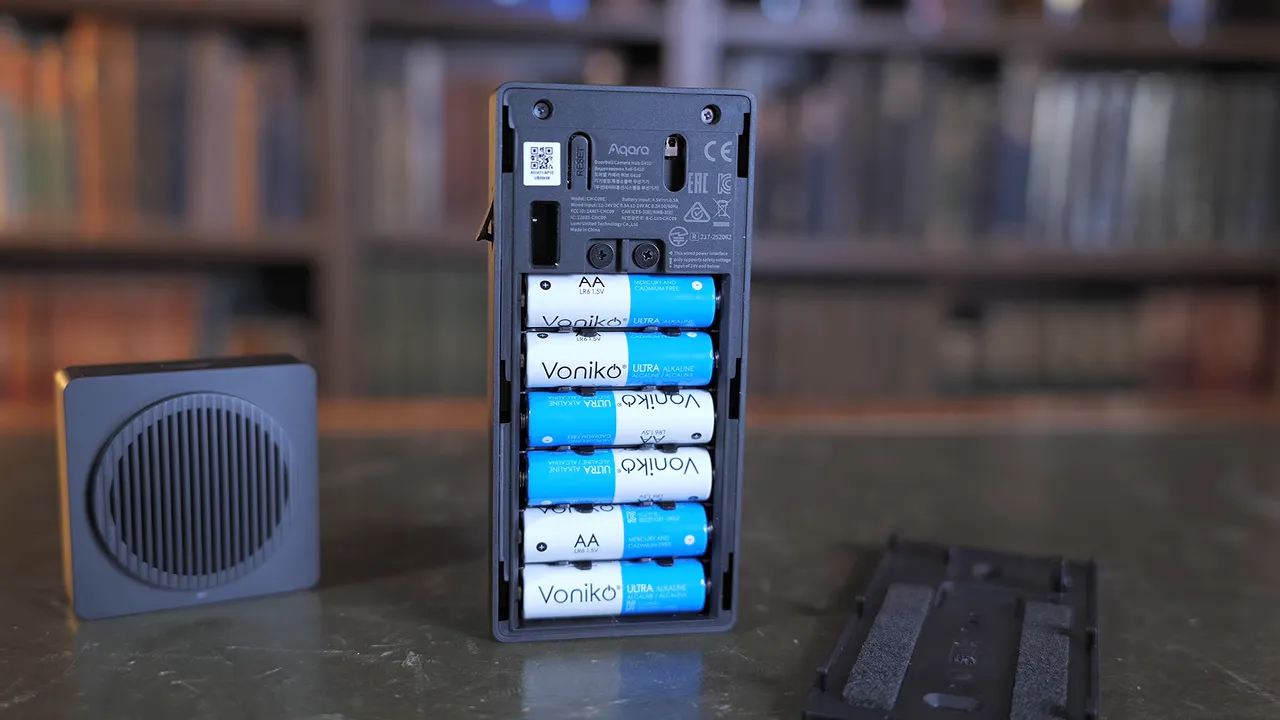
At roughly £99, down from £145, this is close to a third off and potentially the lowest price I’ve seen for it. If you already have Aqara kit, it looks like a particularly sensible addition. If you’re starting from scratch, combining the doorbell and hub is an appealing way to keep the setup tidy.
Bluetti Elite 300: A Compact Power Station with Serious Capacity
Advertised UK deal: approximately £1,600 down to £1,299.
The Bluetti Elite 300 is a much bigger purchase, but portable battery storage is an area worth keeping an eye on.
For me, plug-and-play solar and battery storage represent a hugely interesting direction for smart homes. Bluetti’s Balco transfer hub concept is part of that appeal, offering a route for compatible batteries to work with a home energy setup. At the time of these deals, I was still hoping for a UK launch of that hub, so I wouldn’t buy on the assumption that it is already available here.
I haven’t personally tested the Elite 300. I have tested other Elite models and older Bluetti power stations, but this recommendation is based on the advertised specifications rather than a completed hands-on review.
Three kilowatt-hours without an enormous box
Bluetti pitches the Elite 300 as the world’s smallest 3 kWh power station. The quoted weight is 26.3 kg, with dimensions of approximately 36 × 30 × 30 cm. That combination of capacity and size is particularly interesting for campers, boats and tiny homes, where spare space tends to disappear rather quickly.
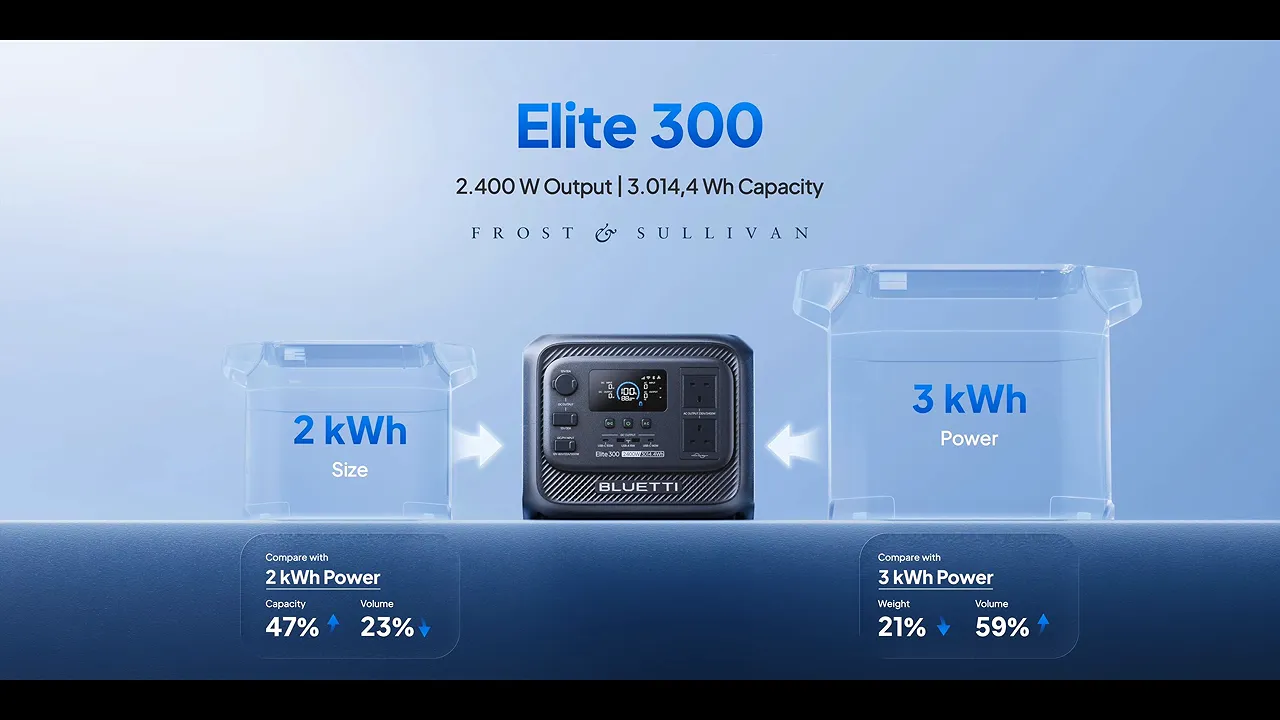
It uses an LFP battery and offers 2,400 W of continuous AC output, with a quoted surge capability of twice that for equipment with a brief startup demand.
The UK version’s connections include:
- Two standard AC outlets.
- A 12 V, 30 A DC port for loads such as vehicle fridges and pumps.
- A 120 W cigarette-lighter socket.
- 100 W USB-C charging.
- Two 15 W USB-A ports.
That gives it a useful spread of outputs for phones, laptops and more demanding equipment, rather than limiting it to a single type of use.
Flexible charging and backup power
You can recharge from a wall outlet, solar or DC power. It also supports pass-through charging and quotes a 10 ms switchover time to help maintain power during an outage.
The reduction to £1,299 takes roughly £300 off the usual price quoted here. It remains a substantial investment, but the capacity, compact footprint and range of outputs make it an interesting prospect for portable power and home backup alike.
UGREEN Nexode Pro 300 W: The Charger That Replaced My Other Chargers
Advertised UK deal: approximately £125 down to £114.
The UGREEN Nexode Pro 300 W desktop fast charger doesn’t have the biggest discount on this list. It is, however, one of the most useful bits of tech I’ve had in the studio this year.
There’s rather more going on inside it than the phrase “USB charger” suggests.
GaN technology and temperature management
This is a gallium nitride, or GaN, charger. Compared with conventional silicon-based charging designs, GaN can help reduce heat and enable a more compact build. That’s part of how this little desktop unit manages a total output of 300 W.
UGREEN also includes temperature monitoring quoted at around 200 checks per second, alongside protection against overcurrent, overvoltage, short circuits and overheating. A flame-retardant casing and graphene-copper heat sink form part of the thermal design.
The point isn’t that a small charger should magically be trusted because it says GaN on the box. It’s that this combines high power density with a substantial set of temperature-management and protection features.
Eight ports, with a shared 300 W power budget
The quoted individual port limits are:
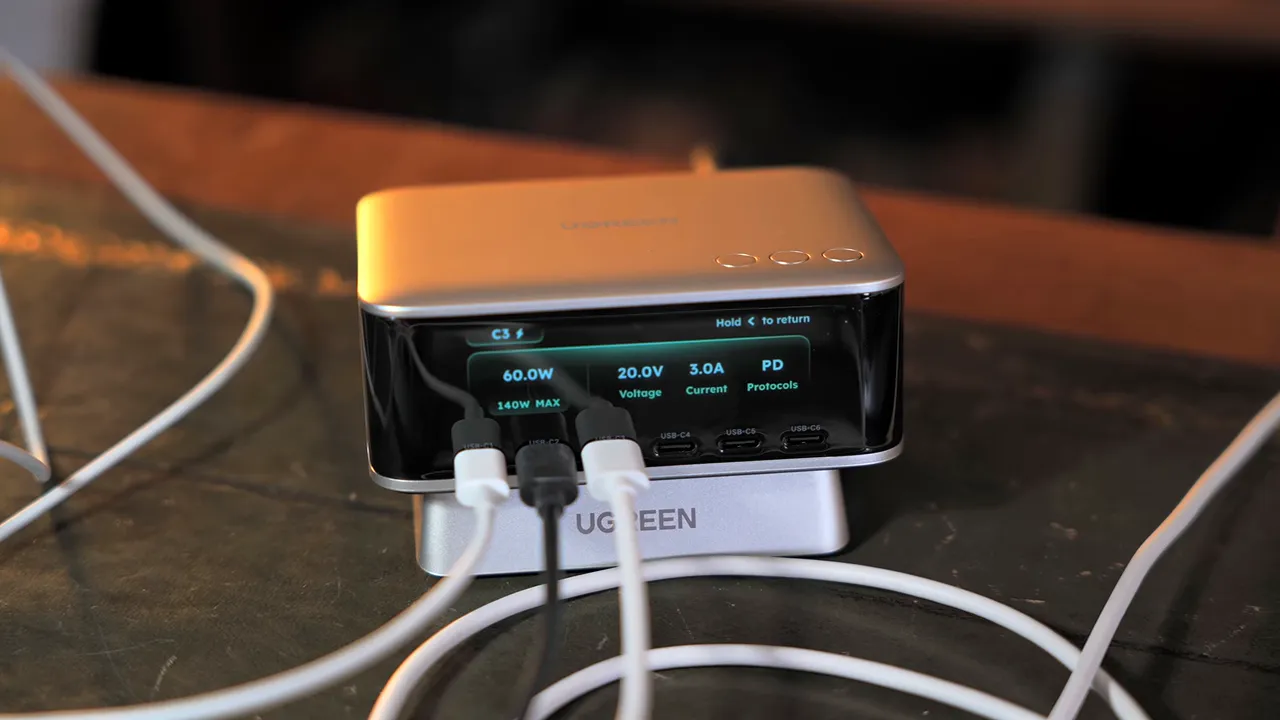
- USB-C1, C2 and C3: up to 140 W each when used individually.
- USB-C4 and C5: up to 100 W.
- USB-C6: up to approximately 31 W.
- USB-A: up to 22.5 W.
- DC output: up to 240 W.
Those are individual maximums, not outputs you can add together. The charger dynamically shares its 300 W total as more devices are connected, so the available power per port changes with the load.
The built-in TFT display makes that much less mysterious. It can show real-time wattage, voltage, current, charging protocol and temperature, with information for the station and individual ports. You can actually see where the power is going instead of guessing.
Over Wi-Fi or Bluetooth, the app lets you choose fast charging, low-temperature operation, port priority and custom modes. You can also adjust screen brightness, set sleep timers so it dims overnight and install over-the-air updates.
Why it earns its place on the desk
In the studio, I’m constantly charging cameras, phones, headphones and seemingly everything else with a battery inside it. This has become the one unit I use for that job.
It makes just as much sense as a family charging hub. Rather than having a dozen separate chargers scattered around the house, you can bring tablets, laptops and phones together in one place, subject to that shared power budget.
At around £114 it is still expensive for a charger. But when it replaces a whole collection of them and becomes something you use every day, the value is easier to understand. The discount is modest. The usefulness is not.
Tapo C675D Kit: Two Lenses That Both Record in 4K
Advertised US deal: $229 down to $169.
The Tapo C675D camera kit is another product I haven’t tested myself yet. This one caught my attention partly because of Paul Hibbert’s very enthusiastic assessment, and partly because it addresses something that has increasingly bothered me about multi-lens security cameras.
Quite often, one lens gets the headline resolution while the others make do with 2K or less. Having multiple angles is useful, but I’d rather not accept a substantial quality compromise on one of them.
The C675D’s selling point is that both lenses can record in 4K.
There’s a fixed upper camera and a separate-looking lower tracking camera, with 360-degree movement and 128 degrees of tilt. The arrangement makes it look a little like a Star Wars droid. I’m not complaining.

A large solar panel helps keep the internal battery charged. The image quality, including night performance, is a major part of the appeal highlighted in Paul’s testing.
For a closer look at the evidence behind that recommendation, Paul Hibbert’s full Tapo C675D review is worth a look. My own verdict will have to wait until I’ve put it through testing.
The US reduction from $229 to $169 is substantial enough to make this worth investigating if you’re after a dual-lens solar security camera. I only have US pricing, so a matching UK discount isn’t something I can promise.
Amazon Echo Deals: A Simple Route into Smart Home Automation
Example UK deal: Echo Dot approximately £60 down to £30.
Prime Day has become a fairly reliable opportunity to find heavy reductions across Amazon’s own hardware, including Echo devices, Kindles and Fire TV products.
I use plenty of Echo devices around the house. They’re a straightforward way to get started with smart home automation while also putting a smart speaker in whichever rooms you need one.
There are too many models and offers to sensibly run through every single one, but the Amazon Echo deals page brings them together. The standout example here is an Echo Dot dropping from roughly £60 to £30.
That sort of reduction makes more of a difference if you’re equipping several rooms rather than buying just one speaker. It’s certainly worth checking the range before paying the usual price.
One Non-Tech Detour: Laphroaig 10 Year Old
Advertised UK deal: £21.
Right, this has absolutely nothing to do with charging protocols, Thread networks or camera resolution. But the Laphroaig 10 Year Old whisky deal deserves a mention.
It’s comfortably among my five favourite whiskies. Deliciously smoky, wonderfully suited to an autumn evening and, at £21, the cheapest I’ve seen it in quite some time. The distillery even holds a royal warrant.
There is a warning attached, though: this is very much a Marmite whisky. If you love that smoky, medicinal character, it’s glorious. If you don’t, you may decide somebody has poured TCP into your glass.
You’d be wrong, obviously. But at least you’ve been warned.
Which Deals Would I Prioritise?
The Soundcore Liberty 5 Pro earbuds and UGREEN Nexode Pro charger are the easiest personal recommendations here because they’re products I keep returning to. One delivered remarkable microphone noise reduction in my testing; the other has quietly become essential studio equipment.
The Aqara G410 is particularly appealing if combining a doorbell and smart home hub helps simplify your setup. The Bluetti Elite 300 and Tapo C675D are worth investigating for their specifications and advertised savings, with the important distinction that I haven’t completed my own testing of either.
That’s the useful way to approach these autumn Prime Day deals: start with the job you actually need a product to do, then decide whether the discount makes a good fit even better. A cracking price is lovely. A piece of kit you’ll genuinely use is better still.


